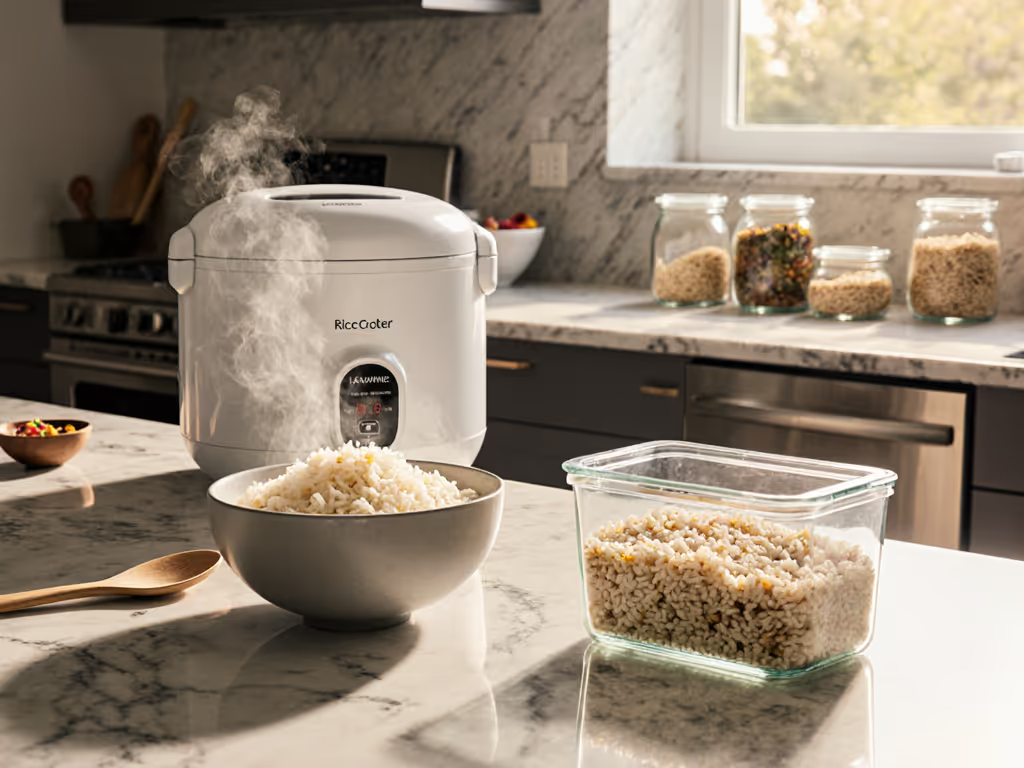
Rice Cooker Basics, Care & Safety
Resistant Starch Rice: Cooling for Better Health
19th Mar•10 min read
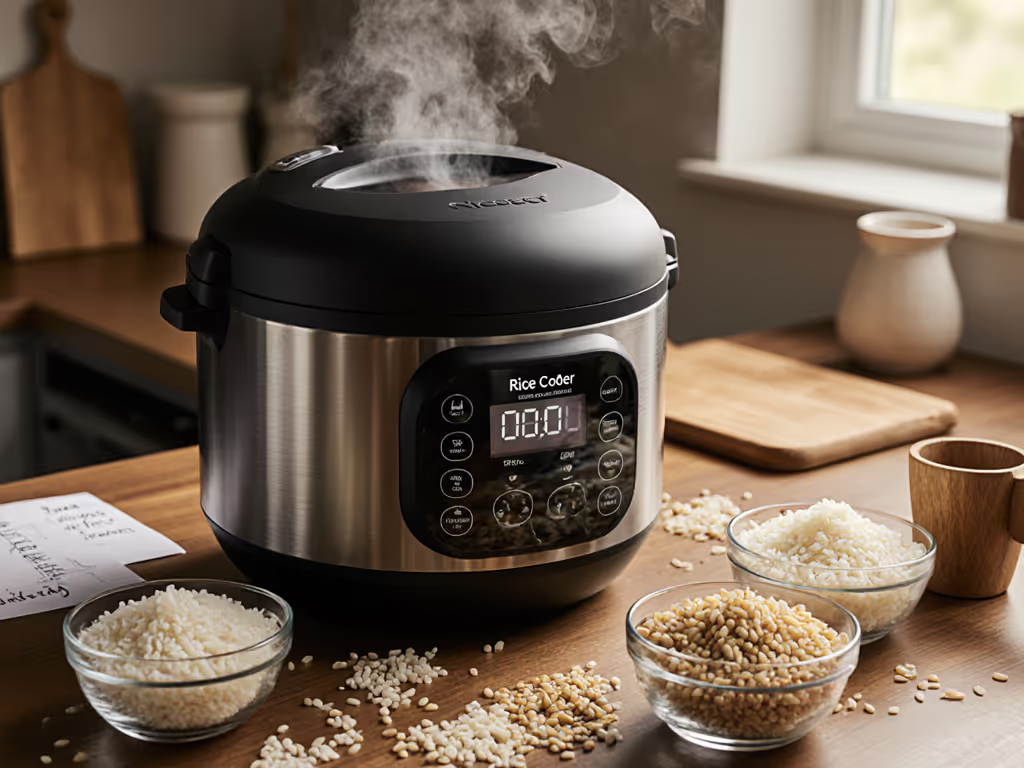
A rice cooker setting called My Mode puts parameter control directly into your hands (specifically, soak time and heat intensity), allowing you to customize texture by grain without guesswork. Most cooks think of a rice cooker as a black box: add rice, add water, press a button. What happens inside stays hidden. My Mode breaks that assumption and reveals the two levers that actually drive your rice texture: how long the grain absorbs water, and how much thermal energy the cooker applies during boil and simmer. The difference between sticky and separated, chewy and dry, lies in those two variables. Texture is a measurement, not a mood. Let's prove it.
Why does this matter? Because standard presets (white rice, brown rice, quick cook) are averaged across brands, grain ages, and batch sizes. They can't account for the basmati you bought last month versus the bag you opened yesterday, or why your 1-cup cook tastes gummy when your 6-cup batch turned out distinct. That's where My Mode closes the gap. Instead of hoping the cooker's algorithm fits your grain, you dial in the conditions that will produce your target bite feel.
When rice sits in water before heating begins, the outer layer of the grain absorbs moisture. This is called the soak phase. More soak time = faster water penetration into the grain's center. Less soak time = uneven hydration, which often leaves the center harder or chalky.
Here's the mechanical insight: short-grain varieties (Korean, Japanese sushi rice) have shorter, wider grains and benefit from longer soak times (often 10-20 minutes) because they hydrate quickly and need time to soften evenly. Long-grain varieties (jasmine, basmati) are denser and longer; they absorb water more slowly, so soak times of 0-5 minutes often suffice. If you give basmati a 20-minute soak, you risk mushy, mealy grains.
In My Mode, you're directly controlling the soak timer. A precise delta (say, 8 minutes for a heritage short-grain blend versus 3 minutes for jasmine) can shift your bite feel by 15-20% in softness. This is repeatable. If your previous cook scored "too sticky" on the bite-feel scale, you reduce soak by 2-3 minutes on the next batch and log the result. After three or four trials, you've mapped your target.
Once the soak phase ends, the cooker transitions to active heating. This is where the boil and simmer occur. Heat time in My Mode typically refers to the duration of high-energy heating before the cooker shifts into hold mode.
Higher heat duration or intensity = faster moisture evaporation and a firmer, more separated grain structure. Lower heat or shorter duration = more residual steam and a softer, more cohesive bite. The delta is again measurable. Reduce heat time by 3-5 minutes and retest. Did the rice go from "chewy" to "bouncy"? If yes, you've found your tolerance window.
This is where cross-grain algorithm behavior becomes critical. Cooks using mixed-grain batches (brown rice plus white rice, or short-grain plus broken grains) face a real problem: one component may hydrate and cook faster than another. My Mode won't magically solve mismatched grain combos, but it gives you the method to find the least-worst compromise. Run the same mix three times with different heat durations (say, 15, 18, and 21 minutes), then photograph the result. Plot the texture of each component against heat time. You'll see where the trade-off curve flattens out. That's your sweet spot.
Bite feel (that critical sensory marker of success) depends on starch gelatinization (how much the starch granules have softened and absorbed water) and grain separation. A fluffy jasmine has high starch gelatinization and distinct grains. A sticky sushi rice has high gelatinization and tight grain adhesion. A crunchy fried-rice-ready grain has low gelatinization and pronounced separation.
When you adjust My Mode:
The key is logging the inputs and outputs. Write down your soak and heat settings alongside a simple texture score: softness (1-5 scale, 1 = hard, 5 = mushy) and separation (1-5 scale, 1 = clumpy, 5 = fully distinct). After a dozen cooks across two or three grains, you'll have a personal texture map.
Most cookers with My Mode start with a default setting (often 0 minutes soak and 0 minutes custom heat, meaning the cooker's internal algorithm decides). If you're new to customization, don't start from zero.
Instead, cook one batch using the standard white or short-grain preset. Evaluate the bite feel: is it closer to your target or too soft/too firm? If it's too soft, your next My Mode run should reduce both soak time (by 2 minutes) and heat time (by 3-5 minutes from the default). If it's too firm, do the opposite.
Run the second batch and compare side-by-side. Did the texture move toward your goal? If yes, try a smaller adjustment (1 minute soak, 2 minutes heat). If it overshot, split the difference. This is iterative and methodical, not random.
When I tested different cooker models over a rainy week, I logged boil-to-simmer transitions and pressed cooled grains into a gridded tray to score stickiness and bounce reproducibly. One budget model that seemed unimpressive on the spec sheet actually matched my reference Koshihikari chew within a 3% spread after I tuned its My Mode settings across five trials. Curious how an entry-level unit handles customization? See our Cuckoo CR-0655F review with My Mode testing. That revealed something crucial: the hardware was capable; the default algorithm just wasn't calibrated for my grain batch and kitchen humidity. My Mode gave me the tool to close that gap.
Pitfall 1: Over-customization. If you adjust both soak and heat simultaneously, you can't isolate which variable moved your texture. Change one at a time, keep all other factors constant (same rice brand, same water source, same measurement cup), and log everything. If measurements trip you up, use our water ratio guide for baseline calibration.
Pitfall 2: Ignoring grain age. Older rice absorbs water more slowly than fresh rice. If you cooked basmati successfully last month but the new bag from a different harvest tastes hard, don't blame your cooker. Adjust soak time up by 2-3 minutes first.
Pitfall 3: Batch-size blind spots. Many My Mode tests happen at 2-3 cups. When you scale to 6+ cups, water distribution changes and heat transfer slows. Your 3-minute soak might not hydrate a full pot evenly. Test your settings across at least two batch sizes before declaring victory.
If you're cooking one grain type, in consistent conditions (same kitchen, same water hardness, similar seasonal humidity), and the standard preset yields acceptable results within your tolerance, stay with the preset. Simplicity has value. If hard water is a factor in your home, see our hard water cooker tests to fine-tune expectations and maintenance.
Use My Mode when:
Start by measuring your current texture outcome against a clear scale (softness, separation, aroma) using the same batch of rice across preset and My Mode trials. Document soak and heat settings alongside photos and a simple numerical score. Within five or six cooks, you'll have enough data to predict the texture delta from a 1-minute change. From there, you own the machine. Your cooker becomes a repeatable tool, not a variable appliance. That's the promise of customization grounded in method, not mystique.
For your next grain experiment (whether it's a heritage short-grain blend, a basmati from a new harvest, or a brown-and-white mixed batch), log your My Mode journey. Track soak, heat, outcome, and refinement. Share your deltas with other cooks who have the same cooker and grain. Over time, a community of texture-first data will emerge, free of marketing fog.