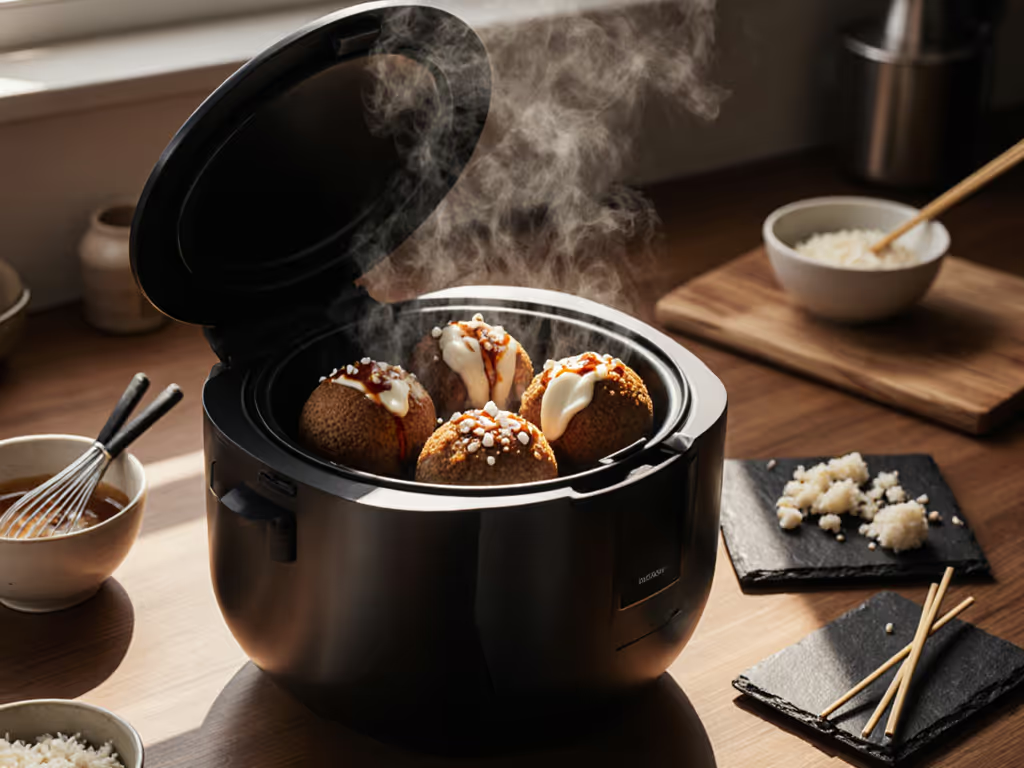

Legume Sprouting: Rice Cooker Temperature and Timing
By Mei-Lin Zhao • 27th Mar
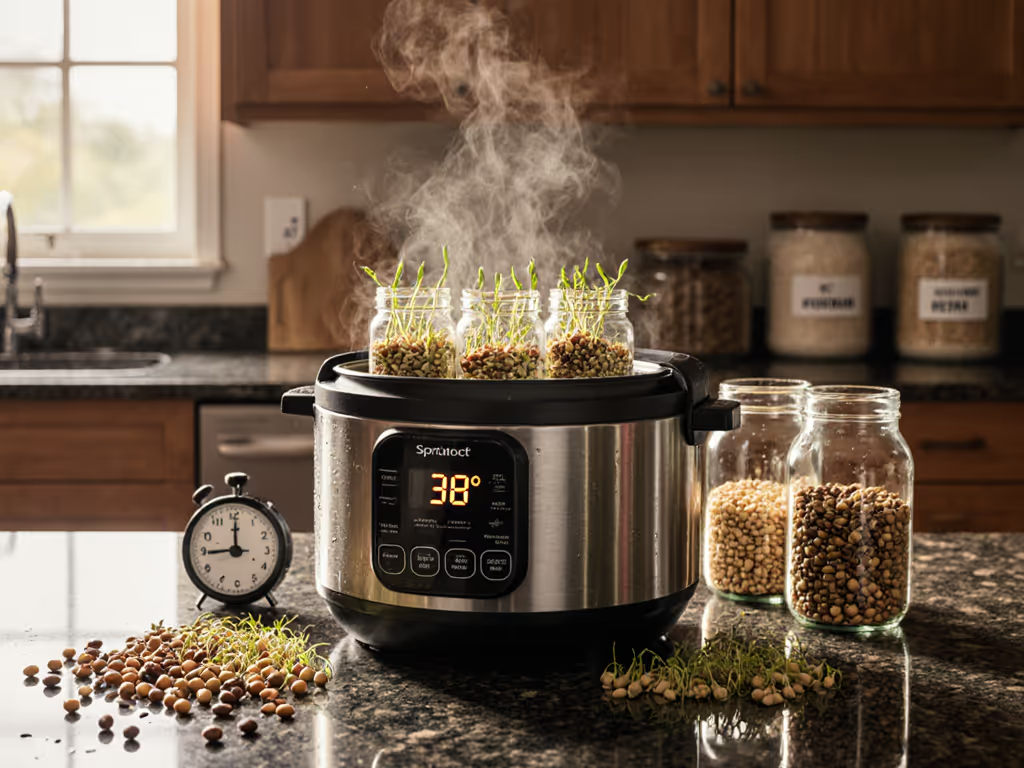
The question isn't whether a rice cooker can sprout legumes. It is whether you're listening to what the grain is telling you. When you understand the precise interplay between temperature, soak duration, and the grain's readiness to germinate, your legume sprouting outcomes shift from unpredictable to repeatable. This guide maps the thermal and temporal windows that unlock enzyme activation and deliver the tender bite that defines a properly sprouted legume. For a step-by-step walkthrough, see our rice cooker sprouting method.
Why Rice Cooker Sprouting Works
Legume sprouting relies on three non-negotiables: warmth, moisture, and air. A standard rice cooker isn't designed for sprouting, but its insulated chamber and ability to maintain ambient temperature make it a pragmatic vessel when you work around its limitations. The cooker's body holds moisture while its lid prevents total desiccation (conditions closer to what sprouting requires than an open counter).
Enzyme activation begins the moment a legume absorbs water. That first soak triggers dormancy-breaking chemistry: starches convert to simpler sugars, fiber becomes digestible, and protein bioavailability increases. This metabolic shift requires consistent warmth and repeated water refreshes. The texture that emerges (a tender yet intact seed coat, a fully hydrated cotyledon, a barely visible rootlet emerging) tells you the enzyme work is complete. The bite tells the truth about whether conditions were right.
What Temperature Range Matters for Sprouting?
Mung beans, lentils, chickpeas, and other legumes germinate best between 30-40°C (86-104°F). This narrow window is critical: below 30°C, germination slows dramatically; above 40°C, you risk killing dormancy-breaking enzymes.
Your rice cooker's warm setting typically holds 60-70°C, which is too hot. Your cooker's cook setting is far too hot. Instead, you need a modified setup:
- Without external heat: Place your legume-filled vessel in the closed cooker with warm water, but do not turn the cooker on. Change the water every 8-12 hours. This works best in climates where room temperature stays above 20°C (68°F).
- With gentle external heat: A small heating pad set to low, or a clip-on light bulb on a temperature sensor, positioned under the cooker's base, can maintain the ideal range. Japanese-style adjustable heating pads often default to 80°C (which is too high), so you'll need to limit electrical input or use a thermostat controller to drop the temperature to your target. If your cooker’s readings seem off, use our temperature sensor calibration guide to verify and tune accuracy.
- In warm climates: If outdoor temperature is reliably 25°C or higher, the insulation of a closed rice cooker may provide enough passive warmth, especially if you place it in indirect sunlight.
Honor the grain's story by nailing its bite, and that begins with respecting the thermal window sprouting demands.
Timing: How Long Should Legumes Soak?
Timing varies by legume type and desired bite. Here's the evidence:
Mung Bean Sprouting: Most sources recommend 2-3 days of continuous soaking with water changes every 8-12 hours. By day 2, you should see tiny rootlets emerging. The sprout length signals readiness: a 1-2 mm tail indicates enzyme activation is underway; a 3-5 mm tail shows the legume is ready for cooking or further use.
Brown Rice (for GABA production): Research conducted in Japan has validated a 16-hour soak cycle for maximum GABA (gamma-aminobutyric acid), which some associate with improved digestibility. However, full sprouting (visible rootlet emergence) typically requires 2-3 days at proper temperature. For the underlying food chemistry, read the science of cooking rice and how temperature shapes enzyme activity.
Chickpea and Lentil Sprouting: These legumes are slower than mung beans. Plan for 3-4 days of soaking, changing water every 8-12 hours. The goal is a barely visible sprout (just the seed coat starting to crack). Over-sprouting toughens the exterior.
A crucial rule: change water consistently. Stale water invites fermentation and off-flavors, destroying the clean, tender bite you're building. Set a phone reminder for every 8-12 hours. This rhythm (drain, rinse, refill) is as ritualistic as any kitchen practice, and it's where most home cooks falter.
How Do You Know When Sprouting Is Complete?
Your senses are the best tools. When the water looks cloudy after a drain, don't assume failure, that's just starch and enzyme byproducts. The real markers are these:
- Visual: A 2-5 mm sprout tail is visible, depending on the legume type.
- Texture: Pinch a cooled legume between your thumb and forefinger. It should yield slightly but still hold its shape. There is a quiet resistance, a gentle give. If it crumbles or stays hard, it needs more time.
- Taste: A sprouted legume tastes faintly sweet, never bitter. Bitterness signals mold or bacterial overgrowth, so discard the batch.
- Aroma: The smell should be clean, slightly earthy, neutral. Any sourness or ammonia means fermentation has begun.
In my auntie's Shanghai kitchen, we knew congee rice was perfectly cooked not by a timer, but by pinching a cooled grain and listening for the tiny tear (the sound of cell walls that had softened exactly enough). That listening translates here: the sprouted legume that yields with a quiet resistance, neither mushy nor crunchy, tells you the work is done.
Using Sprouted Legumes: Texture in the Finished Dish
Once your legumes are sprouted, the bite changes how you cook them. Sprouted mung beans, for instance, can be added raw to salads or blanched for 3-4 minutes to soften the seed coat. Sprouted chickpeas and lentils typically cook 10-20% faster than unsprouted versions because their starches and proteins have already begun to break down. For texture benchmarks and timings on beans cooked directly in a cooker, check our no-soak bean test.
If you're adding sprouted beans to a rice cooker dish (say, bean sprout rice), rinse them thoroughly and add them on top of your grain. They'll steam-cook during the grain's cycle, absorbing subtle flavor while staying tender. The ratio often works out to 1 cup sprouted beans per 2 cups uncooked rice. To keep the base grain perfect beneath those sprouts, follow our water ratio guide.
Addressing Common Failures
No visible sprout after 3 days: Rice varieties matter enormously. Some older or treated rice simply won't germinate. Try a different brand, preferably organic brown rice sold specifically for sprouting. Alternatively, extend to 4 days in warmer conditions.
Sour or fermented smell: Your water-change interval is too long, or your ambient temperature is above 45°C. Water every 6-8 hours instead. If the cooker environment is too warm, remove the batch and relocate to a cooler space.
Legumes remain hard or chewy: Temperature is too low, or you haven't soaked long enough. Verify your external heat source (if using one) with a thermometer. Most thermometers designed for cooking read accurately in the 30-40°C range.
Mold or white film: Inadequate water changes, or a stagnant cooker environment. Ensure air circulation by propping the lid slightly open between water changes. Discard the batch if mold is visible or smell is off.
Moving Forward
Legume sprouting in a rice cooker is less about the appliance's intended function and more about understanding the thermal biology beneath. When you dial in the temperature window, respect the water-change rhythm, and trust the sensory markers your grains and legumes offer, sprouting becomes a predictable ritual. The enzyme activation you've enabled translates into gentler digestion, increased nutrient availability, and a tender bite that respects both the grain and the person eating it.
Experiment with one legume type at a time (master mung beans before moving to chickpeas). Keep a simple log: date, ambient temperature, water-change times, visible rootlet emergence, and final bite texture. Over weeks, patterns emerge. You'll learn whether your kitchen's warmth, humidity, and light favor quick 2-day cycles or patient 4-day windows. That data becomes your guide, more reliable than any general instruction.
Related Articles
Recipes & Cooking Techniques
Zero-Waste Rice Cooker: Recycle Water & Repurpose Leftovers
20th Apr•12 min read