
Best Rice Cookers for Batch Meal Prep: Durability Tested
By Luis Miguel Ortega • 23rd Feb
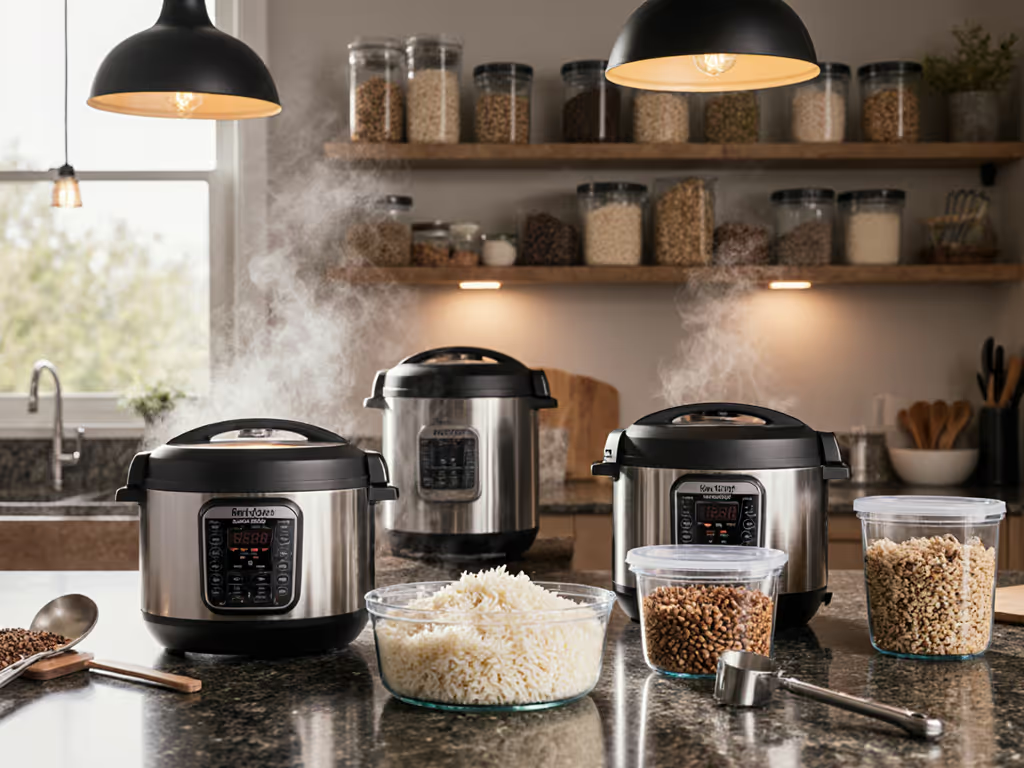
Rice cooker investment decisions often come down to one question: Will this machine handle my high-volume rice cooking needs without falling apart or becoming a cleanup nightmare? If you're meal-prepping for a week, feeding a growing family, running a small catering operation, or simply tired of cooking rice three nights a week, a durable batch-capacity cooker isn't a luxury, it's a foundation for consistency and peace of mind.
This guide walks you through selecting, testing, and maintaining a rice cooker built for real-world durability. For time-saving picks tailored to weekly batching, see our best meal prep rice cookers. You'll learn how to evaluate batch cooking efficiency, confirm meal prep rice consistency, identify what makes a good rice cooker, and master bulk rice preparation without trading durability for convenience.
Why Batch-Capacity Rice Cookers Matter for Durability
Most home rice cookers handle 5-10 cups of cooked rice per cycle. They work beautifully for single dinners, but they weren't engineered for repeated back-to-back cycles, heavy weekly use, or the thermal stress of cooking 20-60+ cups over a meal-prep day. When you overwork a small cooker, heating elements degrade faster, non-stick coatings peel, seals crack, and you end up replacing the machine annually instead of relying on it for years.
Commercial and heavy-duty batch cookers are built differently. They feature reinforced heating systems, thicker insulation, durable pot coatings, and keep-warm functions designed to hold rice safely for hours without quality loss. A 60-cup capacity cooker, for instance, can produce 60 cups of cooked rice in a single 45-50 minute cycle, cutting your total cook time and the number of heating cycles your machine endures over a week.[1]
Less fiddling, more consistent bowls, everyday reliability wins dinners.
Beyond sheer volume, batch-capacity cookers prioritize the features that actually matter for weekly meal prep: thumb-friendly controls, audible completion cues, removable steam caps (so cleanup doesn't require a contortionist), and non-stick pots that truly resist starch adhesion. These details compound over months of use. A simple, durable design outlasts flashy features every time.
Step 1: Define Your Batch Size and Weekly Cooking Pattern
Before comparing models, establish realistic numbers. This clarifies which capacity tier you actually need and prevents overspending on overkill or undersizing into repeated frustration.
Calculate Your Target Cooked Rice Volume
- One person (5 days of meal prep): 15-20 cups cooked rice (5-7 cups per day in various dishes)
- Two people (5 days): 25-35 cups cooked rice
- Family of four (3 meal-prep days): 30-40 cups cooked rice
- Small catering or event (50+ servings): 60+ cups cooked rice
Since raw rice roughly triples in volume when cooked, you'll need to cook 5-7 cups raw rice to yield 15-20 cups cooked. A 20-cup cooker (cooks ~7 cups raw) handles solo or pair meal prep in one cycle. A 30- or 60-cup model eliminates back-to-back cooking on busy prep days.
Document Your Weekly Pattern
Create a simple log:
- Days you cook: e.g., Sunday (main prep), Wednesday (top-up)
- Batch count per session: e.g., 2 batches on Sunday, 1 on Wednesday
- Grains you rotate: jasmine, basmati, brown, sushi rice, mixed grains
- Keep-warm window: How long rice must stay warm before serving or storage (4-8 hours is typical for meal prep)
- Cleanup time available: e.g., 10 minutes post-cooking
This log reveals whether you need a single large cooker or two smaller ones, and whether keep-warm durability is critical.[2]
Step 2: Evaluate Core Durability Features
A durable rice cooker shows its engineering in five key areas. Each one directly affects how long the machine functions and how much cleanup friction it creates week after week.
Heating System and Wattage
A commercial-grade cooker draws between 1200-1650 watts and operates on 120V (North America) or 220V (elsewhere). This consistent power delivers even heating from bottom to pot sides, preventing hot spots that scorch rice or create mushy patches. Machines below 800 watts struggle with large batches and cook unevenly.[1] For lab-tested comparisons of wattage, runtime, and keep-warm draw, read our energy efficiency benchmarks.
Durability implication: Higher wattage cookers reach target temperatures faster, cycle less frequently, and put less thermal stress on seals and heating elements over time. Verify wattage on the spec label, not marketing copy.
Non-Stick Pot Coating and Alternatives
Non-stick interiors make cleanup fast, critical for batch prep workflows. Look for:
- Thick non-stick coating (verified by touching the pot rim; premium coatings feel smooth, not thin or flaky)
- Seamless inner surface (no exposed seams where starch collects and coatings peel)
- Stainless steel alternatives if you distrust non-stick durability or avoid PTFE-based coatings (stainless pots require more elbow grease but last indefinitely)
Hand-wash-only pots are standard in durable models. Dishwashers degrade non-stick in 6-12 months; hand washing extends life to 3-5 years.[1]
Cleanup metric: A quality non-stick pot with soft sponge cleanup typically takes 3-5 minutes post-drain. If you're scrubbing for 10+ minutes, the coating is degrading or was substandard to begin with.
Insulated Lid and Stainless Steel Components
An insulated lid keeps heat stable inside the pot, reducing energy draw during keep-warm phases and maintaining texture. Stainless steel exterior and hardware resist rust and corrosion, especially important if your kitchen has high humidity or if you live near salt air.
Check: Does the lid seal snugly without gaps? Does the exterior show brushed stainless or painted steel? Brushed stainless resists fingerprints and oxidation far better.
Keep-Warm Duration and Temperature Stability
A truly durable batch cooker maintains serving temperature (160-170°F / 70-77°C) for 6-12 hours without drying, yellowing, or off-flavor development. This is essential for meal prep: cook Sunday, eat through Friday without quality loss.
Test metric: Cook a batch, measure rice texture and aroma at 2, 6, and 12 hours. Does it remain fluffy or turn mushy? Does it smell neutral or fermented? Cheaper cookers show degradation after 4-6 hours.[2]
Control Interface: Button Layout and Display
Durable simplicity beats flashy complexity. Look for:
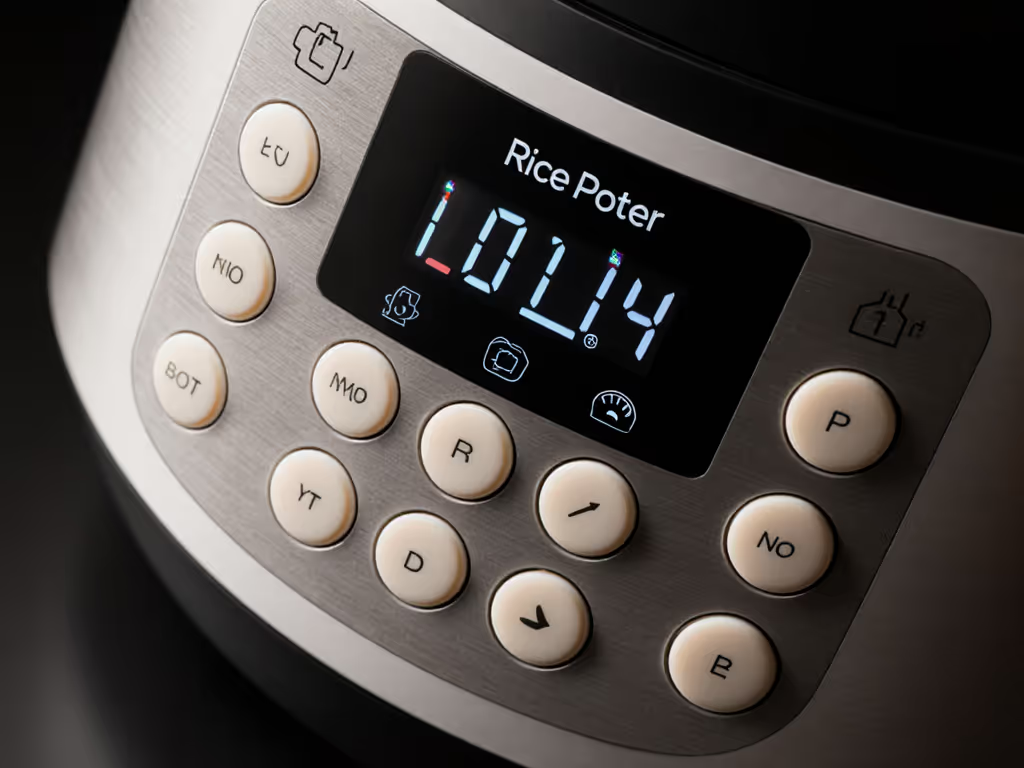
- Large, thumb-friendly buttons (25mm diameter minimum; recessed to prevent accidental triggers)
- Clear, high-contrast display (readable from arm's length; avoids eye strain or misreading cycle times)
- Audible completion cue (beep or chime; essential if you're multitasking or in another room)
- Delay timer (for overnight or morning-start cooking; allows cool-down before meal-prep work)
- One-touch operation for at least one grain type (minimal steps to start cooking)
If buttons are tiny, recessed so far you need a stylus, or the display shows blurry digits, accessibility and durability both suffer. You'll fumble, misset, or tap repeatedly, adding stress to the interface and risking wear.[1]
Step 3: Compare Capacity Tiers and Multi-Batch Workflows
Once you've locked in core durability features, match capacity to your meal-prep rhythm. If you routinely cook 12+ cups, our large-capacity cooker tests compare even-cooking and keep-warm performance for party-sized batches.
Single-Batch Workflow (20-30 Cup Cookers)
Ideal for: 1-2 people, limited counter space, or cooks who prefer two smaller batches over one large one.
- Capacity: 20-30 cups cooked rice (6-10 cups raw)
- Cycle time: 30-40 minutes
- Typical models: Mid-range commercial units from brands like Panasonic or Omcan USA
- Durability strength: Smaller pots heat and cool faster, reducing thermal stress; easier to store or fit in compact kitchens
- Batch cooking efficiency: Two back-to-back cycles (1.5 hours total) cover a week's prep for 1-2 people
Dual-Cycle Workflow (30-60 Cup Cookers)
Ideal for: Families of 3-5, meal-prepping for events, or small catering operations.
- Capacity: 30-60 cups cooked rice (10-20 cups raw)
- Cycle time: 40-50 minutes
- Typical models: Aroma Housewares ARC1033E (60 cups), Hamilton Beach models (30-90 cups)[1]
- Durability strength: Single cycle per session means fewer heating cycles per week; less machine stress
- Batch cooking efficiency: One cycle on Sunday delivers 30-60 cups; minimal top-ups needed mid-week
- Cleanup consideration: Larger pots hold more starch residue; ensure the non-stick coating and pot design minimize caking
High-Volume or Staggered Workflow (60-100+ Cup Cookers)
Ideal for: Catering, meal-prep businesses, or facilities serving 50+ people.
- Capacity: 60-100 cups cooked rice
- Cycle time: 40-60 minutes (often faster via induction steaming technology)
- Typical models: Commercial steamers, AT Cooker induction units, Admiral Craft or Thunder Group models[3]
- Durability strength: Industrial-grade materials, heavy-duty seals, and commercial heating systems; designed for daily high-volume use
- Staggered batch approach: Instead of cooking 200kg once, cook 50kg every 90 minutes, ensuring fresh rice is always available without waste or texture degradation[3]
- Maintenance demand: Higher, requires regular descaling, seal inspection, and part replacement on schedule
Step 4: Test Consistency Across Grain Types and Batch Sizes
A durable cooker that fails to deliver consistent texture across your preferred grains is not a win, it's a source of frustration and waste. Before committing, validate performance.
Multi-Grain Testing Protocol
If possible, borrow or demo the cooker with at least three grains relevant to your household:
- Jasmine rice (long-grain, aromatic): Should yield separate, fluffy grains with subtle floral aroma
- Basmati rice (long-grain, aged): Should cook al dente with distinct separation, no mushiness
- Short-grain or sushi rice: Should be creamy and slightly sticky, not gummy or overly firm
For each grain:
- Use the manufacturer's recommended water ratio (typically on the measuring cup or manual)
- Cook one full batch (cooker's minimum recommended amount, e.g., 5 cups raw)
- Cook one small batch (2-3 cups raw, if the cooker supports it)
- Assess texture, aroma, and consistency between the two batch sizes
Consistency check: If small batches come out mushy or large batches have undercooked centers, the cooker's sensor or heating distribution is compromised. This degrades over time; avoid it.[2][4]
Keep-Warm and Texture Retention Test
- Cook a batch and let it sit on keep-warm for 2, 6, and 12 hours
- Note any changes: Does rice dry out? Does it smell off? Does color shift to yellow or gray?
- A quality cooker shows minimal change after 8 hours; premium models handle 12+ hours without degradation
This test is critical for meal prep. If your cooker can't hold rice quality for your planned keep-warm window, it's not durable enough for your workflow.[2]
Step 5: Establish a Cleanup Routine and Track Maintenance Time
Durability isn't just about the cooker; it's about how you treat it post-cooking. A simple, realistic cleanup habit prevents coating degradation and extends machine life. For deep-clean schedules and steam-vent care, follow our rice cooker maintenance and descaling guide.
Post-Cooking Cleanup Checklist
Immediately after rice finishes:
- Unplug cooker and let cool 5 minutes
- Remove inner pot and pour out any condensation from the lid
- Soak the non-stick pot in lukewarm water with a few drops of dish soap for 2-3 minutes
- Use a soft sponge (never abrasive scouring pads) to gently wipe the inner surface
- Rinse thoroughly and dry with a soft cloth
- Wipe the exterior housing and buttons with a damp cloth; dry immediately
- Leave the lid open and pot air-dry for 30 minutes before reassembling
Total time: 8-12 minutes per batch
Weekly maintenance (every 4-5 batches):
- Inspect the steam vent cap for starch buildup; rinse or soak if needed
- Check the rubber seal around the lid for cracks or residue; wipe clean
- Wipe the exterior heating base with a soft, slightly damp cloth
- Inspect the power cord for damage
Quarterly (every 10-15 batches):
- Run a descaling cycle if your water is hard (check manufacturer instructions; most commercial cookers support a vinegar-water rinse)
- Verify all buttons respond and the display lights fully
- Confirm the keep-warm function reaches proper temperature
Maintenance log template:
| Date | Batch Count | Grain | Texture Notes | Cleanup Time (min) | Issues |
|---|---|---|---|---|---|
| Feb 23 | 1 | Jasmine | Fluffy, separate | 10 | None |
| Feb 23 | 2 | Brown | Slightly firm | 11 | More soaking needed |
Tracking cleanup time reveals if degradation is occurring: if cleanup balloons from 10 to 20+ minutes, the non-stick coating may be failing.[1]
Step 6: Compare Leading Models and Select by Durability Priorities
Based on your batch size and testing results, evaluate specific models. Commercial and heavy-duty brands dominate this space for good reason: they're engineered for repetitive use and parts are replaceable.
Key Brands and Durability Credentials
Aroma Housewares (60-cup ARC1033E and similar):
- Strengths: 1650W heating, stainless steel insulated lid, non-stick inner pot, hand-wash construction, commercial capacity, delay timer, keep-warm function[1]
- Cycle time: ~45-50 minutes for 30 cups raw (60 cups cooked)
- Durability fit: Ideal for families or small meal-prep operations; heavy-duty but not industrial
- Cleanup: Non-stick pot, 8-10 minutes post-cycle; stainless exterior resists corrosion
- Cost tier: Mid-range commercial ($150-250 USD typical)
Hamilton Beach (30-90 cup range):
- Strengths: Multiple capacity options, settings for short- and long-grain rice, digital timers, commercial-grade materials[6]
- Durability fit: Flexible for different household sizes; solid heating and insulation
- Cleanup: Non-stick, moderate starch resistance; check specific model for removable steam cap
- Cost tier: Mid-range ($120-200 USD typical)
Panasonic, Omcan USA, Thunder Group (Commercial lines):
- Strengths: NSF certification (food-service safety), industrial heating, stainless components, parts availability[2]
- Durability fit: Best for high-frequency use (daily or near-daily); designed for commercial kitchens
- Cleanup: Stainless or premium non-stick; higher maintenance but longer lifespan
- Cost tier: Premium commercial ($250-500+ USD)
AT Cooker Induction Steamers (for 100+ cup needs):
- Strengths: 95% energy efficiency, induction-based heating (no hot spots), uniform pressure cooking, staggered-batch capability[3]
- Cycle time: 40-45 minutes
- Durability fit: Industrial-grade; 5-year warranty, 2-year free exchange, 1-year free return (a sign of manufacturer confidence)[3]
- Cleanup: Stainless construction; moderate maintenance but bulletproof durability
- Cost tier: Industrial ($1000+ USD; justified by volume and energy savings over years)
Step 7: Plan Batch Cooking and Schedule for Meal Prep
Once you've selected your cooker, optimize your weekly meal-prep workflow to maximize the cooker's efficiency and minimize your labor.
Sample Weekly Meal-Prep Schedule (Family of Four)
Setup: 60-cup capacity cooker (Aroma or equivalent), target 40 cups cooked rice per week
Sunday Prep Day:
- 7:00 AM: Measure 13 cups raw jasmine rice, rinse, and load into cooker with water (per cooker ratio)
- 7:05 AM: Start cooker on normal cycle; set delay timer for next batch if cooker supports dual-queue (if not, note completion time)
- 7:50 AM: Batch 1 ready; transfer to storage containers; let cool 10 minutes, then refrigerate
- 7:55 AM: Measure 13 cups raw basmati rice, rinse, and load; start cycle
- 8:40 AM: Batch 2 ready; cool and store
- 8:45 AM: Total cleanup (both batches): 20-25 minutes
- 9:00 AM: All rice prepped for the week; cooker cleaned and stored
Wednesday Top-Up (if needed):
- Repeat steps 1-6 with half quantities (6-7 cups raw) or skip if rice inventory is adequate
Batch-to-Storage Timeline:
- Cook → Cool (10 min) → Refrigerate (lasts 5 days)
- Or freeze immediately in portion-sized containers (lasts 3 months)
This rhythm yields consistency: every mealtime features identical rice texture because it's prepped in standardized batches under controlled conditions. No guessing, no mid-week scrambles, everyday reliability wins dinners.
Step 8: Monitor Durability Over Time and Plan Maintenance
A durable cooker requires attention to stay durable. Track performance quarterly to catch issues early.
Quarterly Durability Check
Heating performance:
- Does rice cook in the expected time, or is it slower than when new? (Suggests sediment buildup or element degradation)
- Is texture consistent batch to batch? (Variation suggests heating drift)
Keep-warm function:
- Does the cooker maintain serving temperature for your expected duration? (Thermostat wear or insulation gaps reduce this)
Non-stick pot:
- Does rice stick more than it did when new? (Coating breakdown)
- Are there visible scratches, discoloration, or peeling? (End-of-life signs)
Buttons and display:
- Do all controls respond on first press? (Electrical wear shows as delayed or non-responsive buttons)
- Is the display bright and readable? (Dimming suggests LED degradation)
Seals and vents:
- Is there visible steam leakage around the lid edge? (Seal degradation)
- Is the steam vent cap free of stubborn starch or mineral deposits? (Hard water buildup)
Repair vs. Replace Decision
- Replacement pot: ~$30-80 (worth it if heating and controls are solid)
- Replacement seal kit: ~$15-30 (easy DIY replacement extends life 2-3 years)
- Heating element repair: $100-200+ (consider replacing the cooker if it's >4 years old)
A durable cooker should outlast 5-8 years of regular use (2-3 batches per week). See which brands actually do in our rice cooker longevity analysis. If repairs exceed 30% of the original purchase price and the cooker is >5 years old, replacement is often more economical.
Actionable Next Step: Select, Test, and Commit
Durability isn't a gamble, it's a measurable outcome of deliberate choices. Here's your path forward:
- Define your batch size: Log your meal-prep pattern (calculate cooked rice volume needed per week)
- Rank durability priorities: Large thumb-friendly buttons? Removable steam cap for easy cleanup? Stainless exterior? Quick accessibility to spare parts?
- Demo or trial: If possible, test a leading candidate (Aroma 60-cup, Hamilton Beach, or Panasonic) with your preferred grains and batch sizes before purchasing
- Verify warranty and support: Confirm replacement pot and seal availability; check warranty terms and return policy
- Establish your cleanup routine: Set a 10-minute post-cook cleanup window into your weekly schedule; log maintenance quarterly
- Track and adjust: Use your maintenance log to spot early degradation; address issues before they cascade into failure
When you choose a cooker built for batch use, with simple controls, reliable heating, durable coatings, and accessible support, you're not just buying an appliance. You're investing in the certainty that every Sunday's rice tastes the same, every Wednesday's restock is straightforward, and your cleanup takes 10 minutes, not 30. That consistency is a form of kitchen dignity. Less fiddling, more reliable weeknight dinners. That's the durability that matters.
Related Articles
Best Picks by Lifestyle & Use Case
Reptile Rice Cooker Review: Safe Exotic Pet Meal Prep
3rd Feb•8 min read
Best Picks by Lifestyle & Use Case
Rice Cooker for Homemade Pet Food: Safe & Consistent
6th Dec•6 min read
Best Picks by Lifestyle & Use Case
Rice Cooker for Sight Loss: Tested Reliable Texture & Safety
23rd Nov•8 min read
Best Picks by Lifestyle & Use Case
Dedicated Gluten-Free Rice Cookers: Zero Cross-Contact Guaranteed
13th Nov•8 min read