Comparisons by Price, Features & Alternatives
Rice Rice Cooker vs Oster: Red & Black Rice Texture Tests
2nd Jun•15 min read
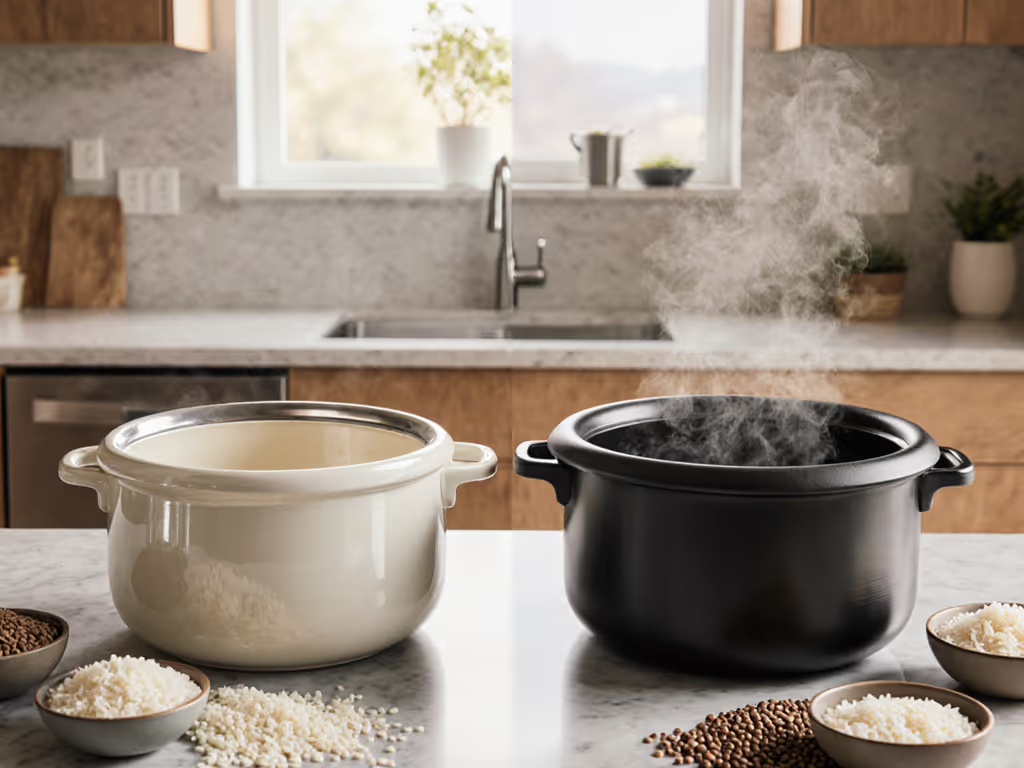
When choosing a rice cooker, the coating inside your pot shapes three outcomes: how your rice tastes, how long the cooker lasts, and whether you're banking on proven safety or marketing buzz. Ceramic and Teflon coatings each deliver on different priorities, and neither is universally "better." What matters is matching the trade-off to your kitchen reality.
Let's settle this first, because health concerns drive most conversations. Teflon-coated pots are FDA-approved and carry no proven human health risk in normal use. The American Cancer Society and regulatory authorities confirm this. The catch: Teflon's safety record depends on temperature control. For a broader safety overview, see our rice cooker safety guide. If a Teflon-coated pot overheats above 570°F (300°C) (which happens rarely in rice cooking), the coating can release fumes. In practice, rice cookers cycle water vapor at much lower temperatures, so this risk is theoretical rather than daily.
Ceramic coatings sidestep this concern entirely. They are non-toxic, chemical-free, and contain no metals or concerning compounds. For households with health anxieties or a preference for minimal chemical coatings, ceramic removes that hesitation. However, ceramic's claim to superiority rests less on avoiding toxins and more on avoiding PTFE altogether, which is a philosophical choice rather than a measured safety gap under normal rice-cooker conditions.
The real health variable isn't Teflon vs. ceramic. It's whether you'll maintain the pot correctly and keep it out of extreme heat situations.
Here's where texture loyalty begins. Ceramic distributes heat slowly but uniformly, resulting in perfectly cooked rice with even moisture absorption. This gentle, steady warmth suits delicate grains (basmati, jasmine, or mixed grains) where you want each grain separate and intact. Ceramic pots also preserve flavor naturally because the neutral material doesn't interact with the rice or water chemistry.
Teflon heats quickly and releases food efficiently, making cleanup faster and preventing sticking. But Teflon's advantage is non-stick performance, not texture precision. Both coatings can deliver fluffy, well-separated grains if the cooker's heating element and water ratios are tuned correctly. The coating itself is one piece of the texture puzzle; the heating algorithm (micom, IH, pressure, or basic resistive) matters more. To see how pressure and IH change grain structure, read our Pressure IH vs standard rice cookers analysis.
Where texture diverges sharply is in cleanup and repeat use. After a few hours of sitting in the pot, sticky residue from rice starch clings differently to each surface. Teflon's slipperiness makes it easier to scoop out and rinse. For cleaning steps that remove starch film and prevent odors, follow our rice cooker descaling guide. Ceramic, while still non-stick initially, can absorb water into micro-pores, and older pots may hold odors.
This is where wallet and timeline align. Ceramic coatings are self-sacrificial: they shed a tiny amount of silicone oil each time you heat them, and once depleted (after 6 months to a year of regular use), food begins to stick. You'll notice rice clinging to the bottom or requiring extra water to prevent burning. Hand-washing extends ceramic life, but the coating fundamentally has a finite lifespan.
Teflon maintains its non-stick properties for at least a couple of years, often longer. Because Teflon is hydrophobic and doesn't break down with each use, it outperforms ceramic in durability tests. The downside: if you scratch the coating with metal utensils or aggressive scrubbing, the damage is permanent. A small scratch exposes the base material, and that spot will rust or stick.
In practice, customer complaint data shows the gap plainly. Teflon-coated models see about 1% sticking complaints, while ceramic-coated versions register 6% or more. That's a 6x difference, even among premium brands.
Teflon-coated cookers are generally more affordable upfront. You'll find solid mid-range options at entry-level prices. Ceramic cookers, especially high-quality ones, often cost more and may not outlast a well-maintained Teflon competitor.
From a cost-per-texture-consistency perspective, here's the math: if a Teflon cooker costs $80 and delivers consistent texture for 2+ years, you're paying $40 per year. A ceramic cooker at $120 that needs replacement after 1 year of heavy use costs $120 per year. The cheaper upfront choice can be the pricier long-term investment. Estimate your true cost with our long-term value calculator.
That said, if your household is light on rice (once or twice weekly), ceramic's shorter lifespan is less consequential. The money you spend upgrades your daily ritual rather than committing you to a long-term commitment.
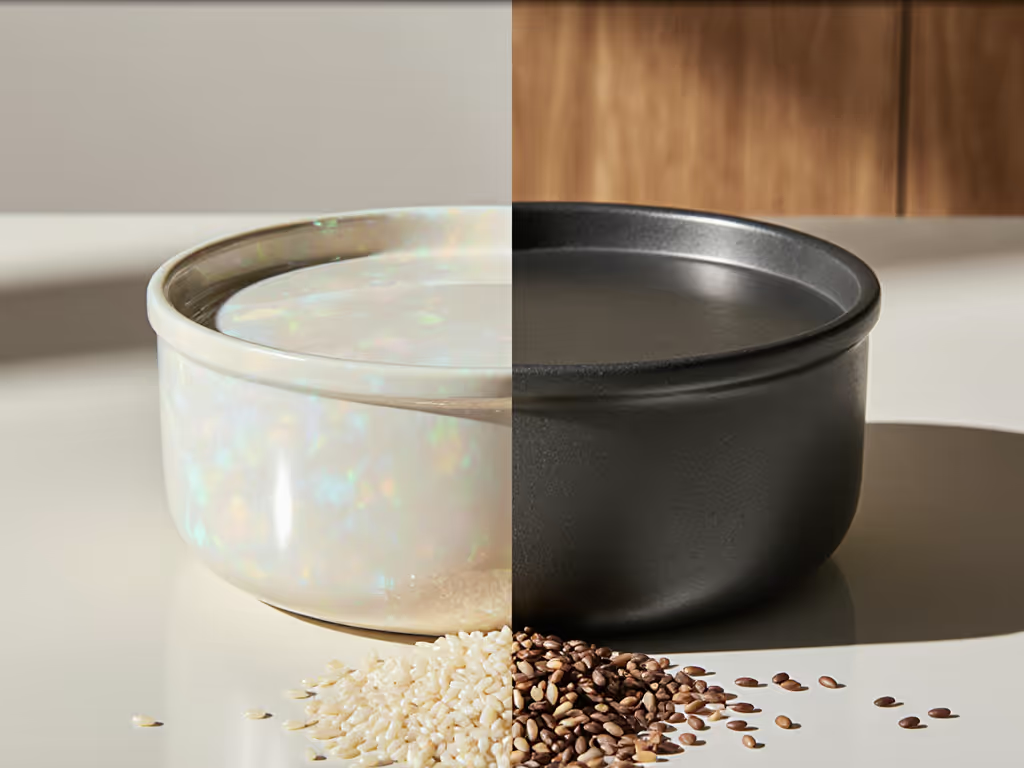
Choose ceramic if:
Choose Teflon if:
Before a cousins-and-aunties potluck, my old cooker burned basmati twice. With payday still a week out, I swapped to a mid-range ceramic model from a community store. I timed three batches back-to-back, checking cleanup and texture drift. The ceramic delivered even, fluffy grains through all three runs, no scorching, no sticky residue. The cheaper option won on texture per dollar, and dinner arrived without apologies. I retired that cooker after 18 months. It lived up to its single-year promise because I used it hard.
That timing taught me something: durability isn't about picking the material that lasts longest in a lab. It's about matching the coating's lifespan to your use frequency and replacement appetite.
For ceramic pots:
For Teflon pots:
Brand marketing often emphasizes "ceramic-infused" or "diamond-coated" labels. These terms dress up basic coatings with prestige language. A ceramic pot is ceramic; a diamond infusion doesn't meaningfully improve durability or texture. Neither coating needs premium certification to perform. Mid-range cookers with either material reliably beat budget basement models and often match luxury-priced alternatives on actual rice outcomes.
The decision isn't about which material sounds fancier. It's about whether you'll retire your cooker after 1 year and accept that cost as part of your cooking life, or whether you'd rather invest in durability and swap utensil habits to protect a 2+ year run.
This week, answer three questions:
How often do you cook rice? (Light: 1-3x weekly; Moderate: 4-5x; Heavy: daily or meal-prep batches.) Light use favors ceramic's lower upfront cost. Heavy use favors Teflon's durability.
How long do you keep appliances before upgrading? If you typically run a kitchen tool for 18-24 months and then replace it guilt-free, ceramic fits your rhythm. If you expect 3+ years of reliable performance, Teflon's durability margin is worth the trade-off in health purity.
What's your cleanup tolerance? Ceramic demands gentler handling and hand-washing. Teflon is less forgiving if scratched but more forgiving in the sink. Honest assessment here prevents buyer's remorse.
Once you've named your use pattern, you know whether ceramic or Teflon aligns with your kitchen life. Neither coating is a trap. The trap is spending for features you won't use or materials that misfit your timeline. Spend for texture you can taste, skip the glitter, and choose the coating your rhythm will actually preserve.