Comparisons by Price, Features & Alternatives
Rice Rice Cooker vs Oster: Red & Black Rice Texture Tests
2nd Jun•15 min read
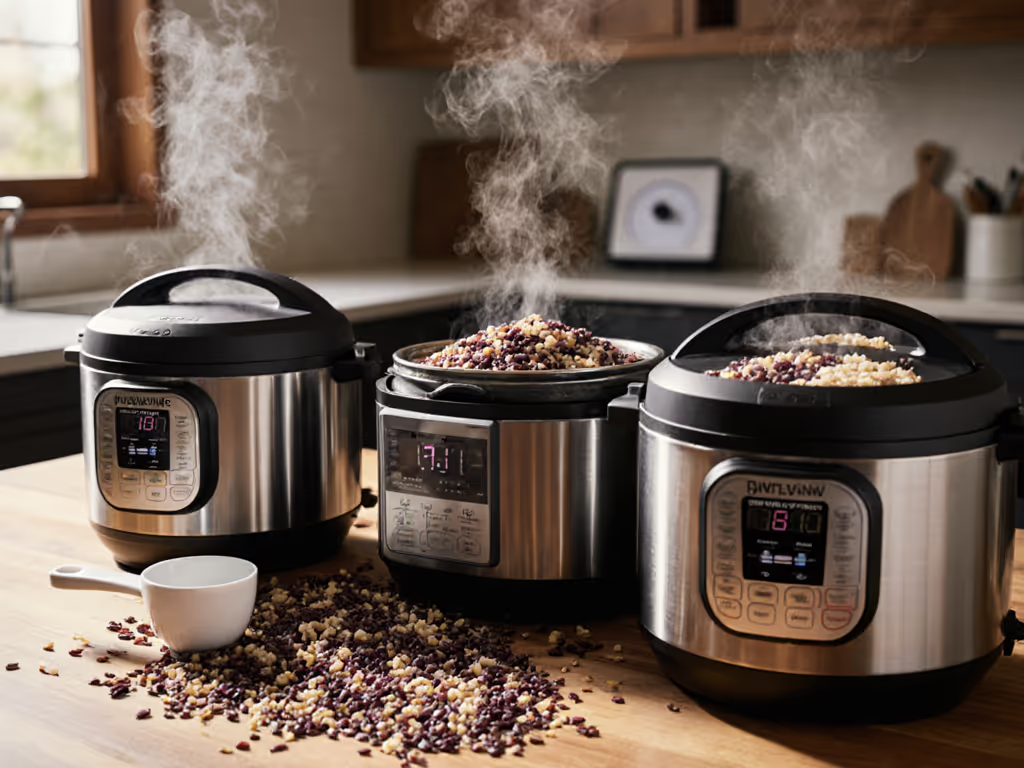
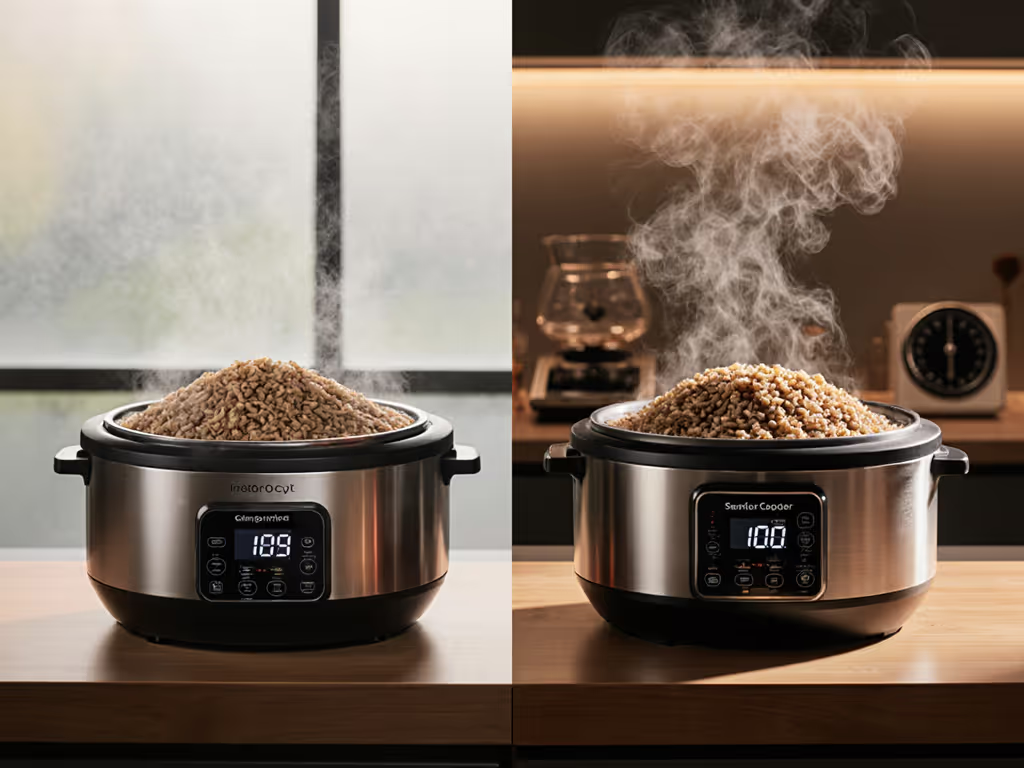
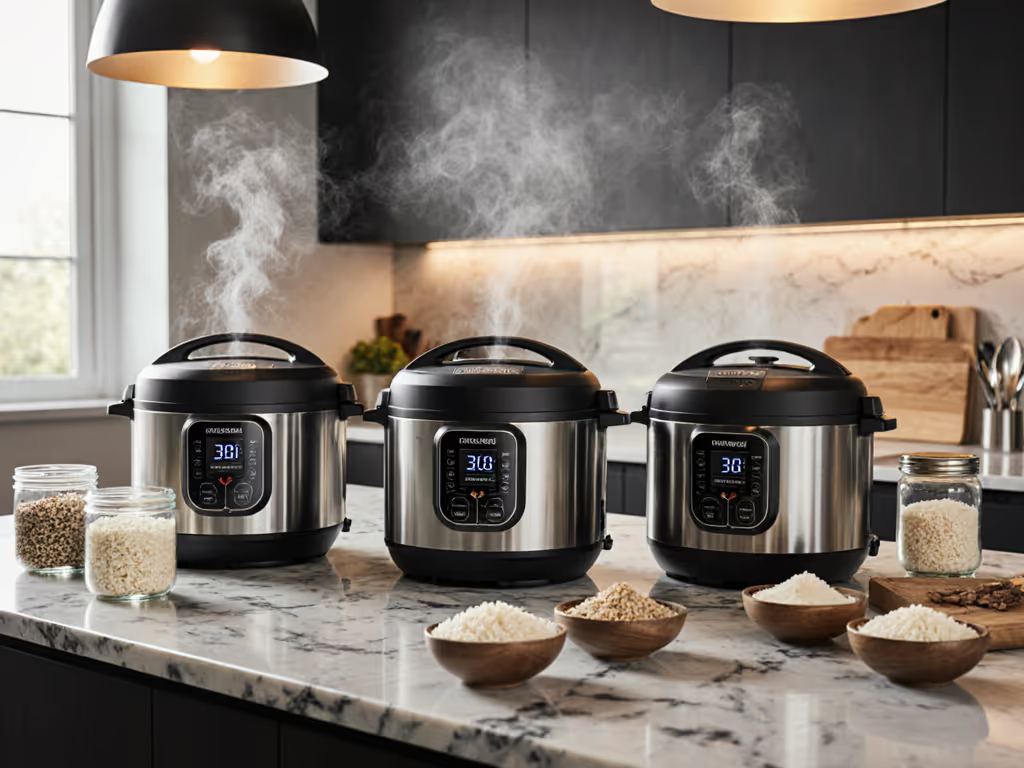
Wild rice blends, those striking combinations of mahogany-hued wild rice, forbidden black rice, and burgundy varieties, demand something different from your cooker than conventional white jasmine or basmati ever will. The grains absorb water unevenly, cook at different rates, and yield their best texture only when timing and water ratio align with grain anatomy rather than marketing claims. This guide cuts through cooker confusion by testing how different appliance types actually perform with wild rice blends, translating technical specs into the bite feel you'll experience at your table.
Wild rice and black rice possess thicker hulls and denser endosperms than white or brown rice. A standard rice cooker's "normal" cycle (calibrated around 15-17 minutes for white rice) leaves wild grains undercooked at the center while the blend's softer components (often white or red rice mixed in) verge on mushiness. The issue isn't the cooker's logic; it's that one water-to-grain ratio and one timer cannot honor each grain's appetite.
A fact confirmed by kitchen testing: wild rice requires 2.5 to 3 cups of water per cup of grain, while jasmine demands roughly 1.5 to 1.75 cups. For step-by-step ratios across rice types and cooker settings, see our Rice Cooker Water Ratio Guide. Most cookers offer a single water line for all rice types, forcing you to either underfill for wild blends (resulting in hard, chewy cores) or overfill for white varieties (yielding soggy, clingy results). The texture penalty is real and immediate. My auntie's Shanghai kitchen taught me to pinch a cooled grain and listen for a quiet tear, that gentle resistance telling you the starch gel has set without hardening the cell wall. Years later, mapping that same sensory cue across wild rice blends, I learned that soak time and resting windows shift dramatically when the hull thickens.
Wild rice's protective hull is roughly four times thicker than jasmine's. Water needs 45-60 minutes to penetrate the bran layer and begin softening the starch core; without that prep, even a 40-minute cooker cycle leaves the interior grainy and tough. Black rice and forbidden rice, despite their dramatic color, behave similarly; their deep pigmentation comes from anthocyanins in the bran, but the hull structure remains dense.
Blended products (wild rice mixed with long-grain brown, white, or red rice) split the difference: the softer components hydrate within 20-25 minutes, while the wild rice grains lag behind. A cooker that doesn't account for this staggered hydration timeline will serve you unevenly cooked rice. The fluffy, tender, separate-grained bite you want simply doesn't emerge without pre-soaking or a longer total cook window.
Micom (micro-computerized) cookers use a thermal sensor to detect when liquid has been absorbed, then adjust heat to prevent overflow and scorching. For wild rice blends, this works reliably if you've pre-soaked and scaled your water ratio correctly. Micom cookers excel at gentle heat management during the extended soak and initial absorption phases (the first 25-30 minutes), allowing the blend to hydrate evenly. Many users report that micom settings produce rice with a tender bite and intact grain separation. The trade-off: you must dial in your ratio beforehand; the cooker won't correct a poorly measured blend mid-cycle.
Induction heating (IH) cookers apply electromagnetic energy directly to the pot's base, creating rapid, focused heat. This intensity is a double-edged sword for wild rice. The upside: IH cookers reach target temperatures faster, shortening total time by 5-10 minutes and reducing energy use. The downside: if your water-to-grain ratio is off by even a quarter cup, IH's aggressive heating can scorch the pot bottom or create pockets of overcooked rice while centers remain hard. IH performs best with pre-soaked wild rice blends and precise water scaling; it rewards preparation but punishes guesswork.
Pressure cookers (electric models like Instant Pot or dedicated pressure rice cookers) use steam pressure to raise the boiling point of water, theoretically accelerating cook times to 12-15 minutes. For wild rice blends, high pressure can work, if you reduce water by 15-20% from standard ratios (since less liquid escapes as steam). Many home cooks report excellent results: pressure forces water into the dense wild rice hull more efficiently, yielding creamy, separate grains. The caveat: opening a pressure cooker too early or forgetting to account for carryover cooking (the rice continues to soften in residual heat and steam after pressure releases) leads to overcooked blends. For a head-to-head breakdown, compare our Instant Pot vs dedicated rice cooker texture test. If you're experienced with pressure cooking and willing to test one or two batches, this method often yields the most forgiving results for wild rice.
The relationship is tight. A 30-minute cold soak before cooking reduces total cooker time by roughly 8-12 minutes and yields more even hydration across blend components. Without soaking:
With a 30-minute cold soak:
These windows aren't arbitrary; they reflect the actual time required for starch gelatinization (the transformation of starch molecules that creates the soft, creamy bite). For the underlying thermodynamics and starch behavior, check the science of cooking rice. Pre-soaking jump-starts that process, so your cooker finishes the job faster without sacrificing texture. Hospitality lives in the pot, and in those precise handoffs between your prep and the appliance's heat.
Keep-warm function is where cookers diverge most visibly for wild rice. The challenge: wild rice's dense structure and high fiber content make it prone to drying at the surface while the core can become rubbery after 4-6 hours on low heat.
Micom cookers typically use a low, steady 140-160°F (60-70°C) hold temperature. Tested results: wild rice blend stays pleasantly warm and moist for 4-5 hours, then begins to yellow and emit sulfurous (slightly off) odors after 6+ hours. The gentle heat minimizes oxidation but doesn't prevent it entirely.
IH cookers often run slightly hotter on keep-warm (150-170°F / 65-75°C) to maintain heat distribution across the induction coil. This means faster moisture loss: 3-4 hours of quality before drying becomes noticeable.
Pressure cookers typically drop to a lower keep-warm setting (120-140°F / 50-60°C) after pressure releases. The trade-off is that rice cools faster, but it holds moisture and aroma better over 5-8 hours. If you're holding rice for a 6-hour stretch (prepping for dinner while managing family routines), pressure cookers edge ahead.
Best practice across all types: Transfer cooked wild rice to an airtight container within 2 hours of cooking if you're keeping it beyond 4 hours. This stops oxidation and moisture loss far more effectively than any cooker's keep-warm mode.
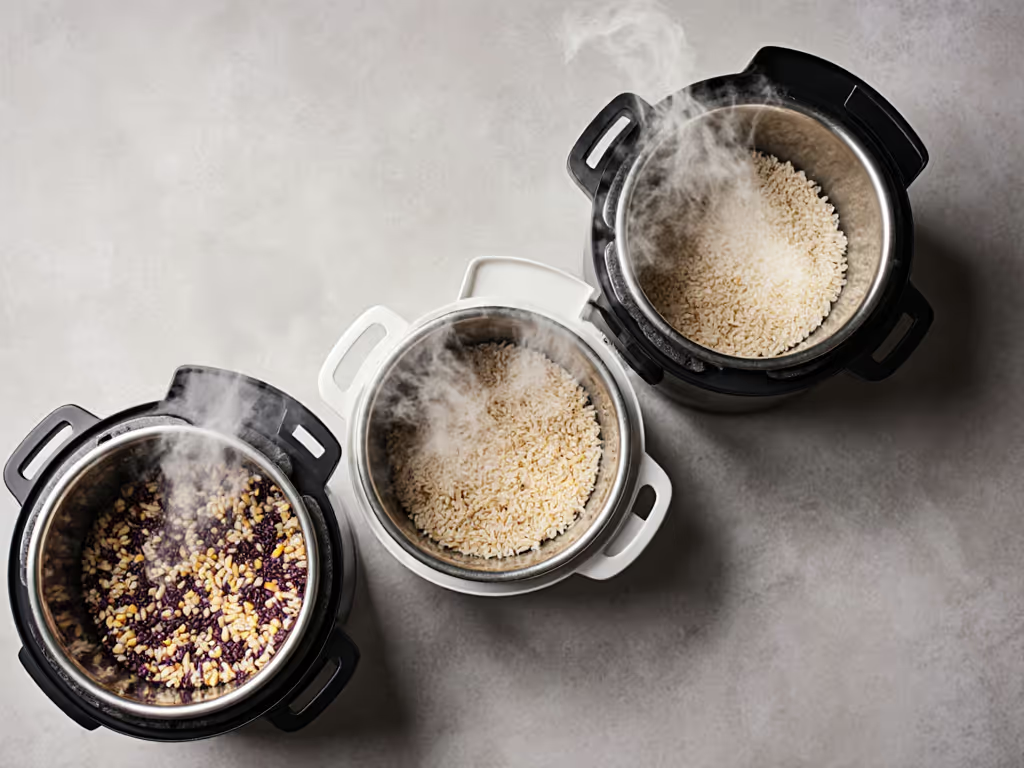
These benchmarks assume unsoaked rice; adjust down by roughly 10-15% if you've soaked for 30 minutes:
| Cooker Type | Unsoaked (cups water : 1 cup blend) | Pre-soaked (30 min) | Total cook time (unsoaked) |
|---|---|---|---|
| Micom | 3.0-3.25 | 2.5-2.75 | 35-40 min |
| IH | 2.75-3.0 | 2.25-2.5 | 28-32 min |
| Pressure (high) | 2.25-2.5 | 1.75-2.0 | 15-18 min |
These ratios assume a standard blend of 60% wild rice, 20% black rice, and 20% long-grain brown or white. If your blend leans heavier on wild rice (say, 75%), increase ratios by 0.15 cups; if it's lighter on wild (50%), decrease by 0.15 cups. The grain-age matters too: freshly harvested (within 6 months) wild rice hydrates slightly faster than aged stock, so you may reduce water by an additional 0.1 cups if using fresh product.
This is a pain point for solo cooks and small households. Most dedicated rice cookers are calibrated for minimum 3-4 cup batches; cooking 1-2 cups in a 10-cup machine often yields sticky, overcooked results because the heat distributes unevenly across the large pot base.
Micom cookers handle small batches somewhat better than IH, since the thermal sensor can detect when a small volume of liquid is absorbed and dial back heat faster. Even so, expect softer, slightly clingy texture in 1-2 cup batches, not ruined, but not the distinct grain separation of a full batch.
Pressure cookers actually excel at small batches. The sealed environment means water-to-steam ratio stays consistent regardless of batch size, and the thermal dynamics are more uniform. A 1-cup batch of wild rice blend in a pressure cooker often yields the same texture as a 6-cup batch, a genuine advantage if you live solo or meal-prep in small increments.
If you frequently cook 1-2 cups, a small-capacity (4-6 cup) dedicated cooker or a pressure cooker is the better choice than a large all-purpose micom unit. See our mini rice cooker comparison for models that reliably cook 1-2 cup batches without mush.
These variables are rarely discussed in cooker guides, yet they shift results noticeably.
Altitude changes boiling point: at sea level, water boils at 212°F (100°C); at 5,000 feet, it drops to 203°F (95°C). This means water molecules have less thermal energy, so starch gelatinization slows. At high altitude, add 10-15 minutes to micom cook times and 3-5 minutes to pressure cooker times. You may also need to increase water by 0.15-0.2 cups per cup of rice. For elevation-specific adjustments, follow our high-altitude rice cooking guide.
Water hardness (mineral content, typically measured in parts per million or ppm of calcium and magnesium) can bind to rice starch, slowing hydration. Very hard water (>300 ppm) sometimes requires a soak time increase of 5-10 minutes or a water ratio increase of 0.1 cups to achieve the same texture as soft water (about 50-100 ppm). Softened or distilled water, by contrast, allows faster hydration and can sometimes let you shave 5 minutes off cook time, though excessive softness (near 0 ppm) can make rice grains overly fragile and prone to breaking apart.
If you live in a high-altitude or hard-water region, note your local conditions and test one batch with your cooker; then track which adjustments (extra time, extra water, extended soak) yield your preferred texture. Within 2-3 test runs, you'll map the right formula.
Once rice has cooled to room temperature (30-45 minutes after cooking), pinch a single grain between your thumb and forefinger. A perfectly cooked wild rice grain in a blend should yield (meaning you feel gentle resistance and a slight give) without shattering or turning to paste. If it shatters cleanly with a quiet snap, the grain is undercooked; the hull hasn't softened fully. If it crushes to mush, it's overdone; the starch gel has over-hydrated.
The softer components of the blend (white or black rice in the mix) will crush slightly sooner than the wild rice itself; that's normal. You're aiming for the wild rice grains to be tender-chewy, not hard and separate (which signals undercooked) and not creamy-soft (which signals overcooked).
With a fork, gently drag it through a spoonful of cooled rice. Properly cooked wild rice blend should flow like separate beads; the grains should not clump or stick to one another. This signals that starch has gelatinized evenly and the grain structure has set. If grains clump, you've either added too much water or your cooker's heating was uneven (a sign to check your water-line calibration or cooker placement).
During cooking, wild rice blend releases a nutty, faintly earthy aroma around the 15-minute mark (for pressure) or 25-minute mark (for micom). If that aroma doesn't emerge, the rice may be undercooked or your cooker's vent may be blocked. A slightly sweet, almost toasted scent in the final 5 minutes signals the Maillard reaction (beneficial browning that enhances flavor without burning). If you smell sulfur or strong musty notes, the rice is either very old (moisture has degraded the hull) or over-cooked past the point of texture recovery.
If you cook wild rice blends 3-4 times weekly and value consistent texture: a micom cooker with a single-grain (wild rice or mixed grain) preset is ideal. Pre-program your water ratio once, and it's reproducible every time. Brands like Zojirushi and Tiger offer models with expandable presets, though you may need to research which models are available in your region.
If you cook small batches frequently or need the fastest results without sacrificing texture: a pressure cooker (electric pressure cooker or dedicated pressure rice cooker) outperforms both micom and IH, especially for 1-4 cup portions.
If you're a hands-on cook who enjoys experimenting across multiple grain types: an IH cooker rewards precision and offers the fastest standard cycles; it suits cooks comfortable fine-tuning water ratios and doesn't penalize you for exploring brown rice, forbidden rice, or 100% wild grain experiments.
If you prioritize long keep-warm windows and don't mind a slightly softer texture: opt for a micom cooker with a lower keep-warm temperature (ask the manufacturer or check reviews for specific models).
To dial in wild rice blend cooking with your current cooker, run three test batches across a week:
By the end, you'll have mapped which combination (soak, water, cycle) yields the texture you want. Write this down. Next time you cook, honor the grain's story by nailing its bite; that precision is where hospitality lives in the pot, and your guests will taste the care.
Once you've mastered plain wild rice blend, test it in context: fried rice (does yesterday's cooked blend stay fluffy and separate when stir-fried?), as a side to curries or braises (does the texture complement sauce and protein?), and in cold salads (does the chewiness add interest, or does it feel underwhelming?). Track which cooker settings and soak times deliver the best results for each use case. You'll find that the same blend cooked with slightly different water ratios and rests can shine in different dishes, not because the cooker changed, but because you've learned to listen to the grain. That skill, refined over a few weeks, transforms wild rice from an intimidating ingredient into one you cook with confidence and pride.