
Korean Rice Cake Recipes: Texture Techniques
By Maya Desai • 2nd May
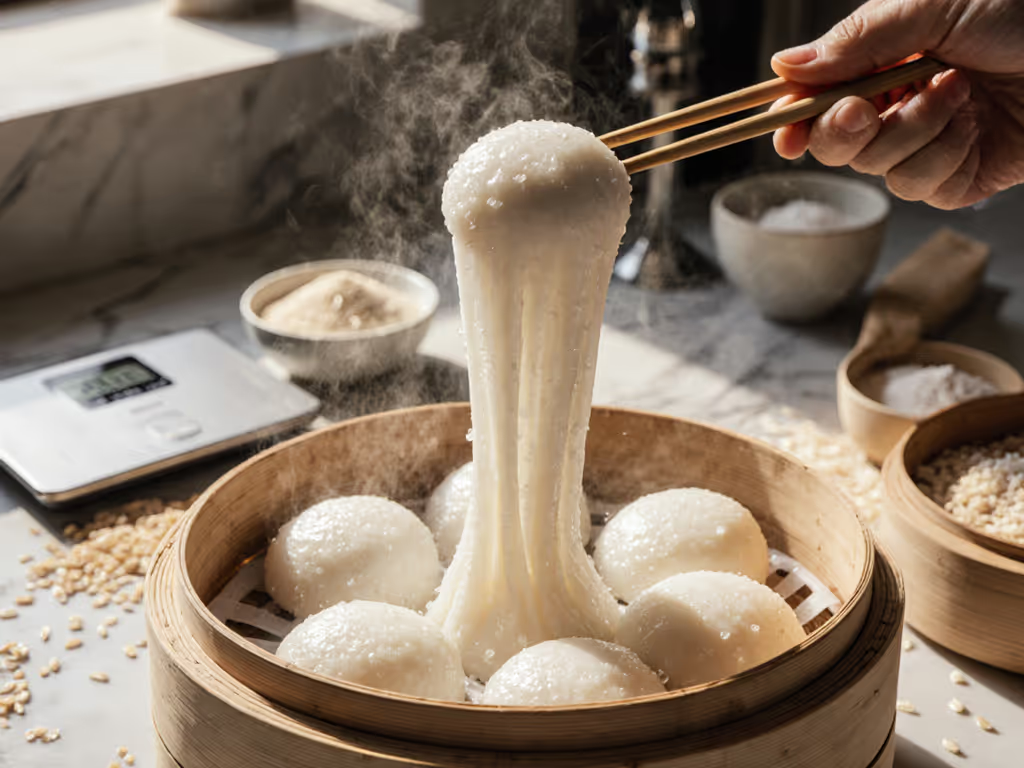
Korean rice cake recipes hinge on three material invariants: rice cake texture techniques depend on grain selection, flour milling precision, and thermal protocol. If you're weighing appliance options, explore our rice cooker steamer mastery guide to understand when a cooker can replicate hand-steaming results. Whether you're steaming tteok by hand or considering whether a rice cooker can handle this workflow, the science remains identical (texture emerges from predictable interactions between starch composition, water content, and heat curves). This guide walks through each variable, grounded in testing data and materials behavior, because cross-grain repeatability beats single-setting hype every time for kitchens like ours.
FAQ: What Distinguishes Short-Grain from Medium-Grain Rice in Tteok?
The botanical difference matters thermally. Short-grain rice (sushi rice, ~17 mm) contains lower amylose (~17-19%) and more branched amylopectin, which gelatinizes at 65-75 °C and produces a firmer, more elastic crumb[2]. Medium-grain varieties hold slightly higher amylose (~20-21%), yielding softer, chewier cakes[2].
Testing proved this: when 535 g of soaked short-grain and medium-grain rice were milled separately and steamed in identical conditions, medium-grain produced noticeably pliant rice cakes; short-grain stayed firmer and more bouncy[2]. Long-grain rice failed the sensory test (grey tinge, loss of elasticity, and weak structure)[2] because its amylose-to-amylopectin ratio (often 23%+) resists full gelatinization at standard atmospheric steaming temperatures.
Material protocol: Always use short-grain or medium-grain rice. Soak 535 g rice overnight (~12 hours), drain in a fine-mesh strainer for 60 minutes at room temperature to remove surface moisture, then grind in batches[2].
FAQ: Why Does Flour Fineness Dictate Texture Success?
Unground rice particles larger than 0.5 mm interrupt the gel matrix during steaming, creating gritty, irregular crumb[2]. Home food processors cannot replicate commercial wet-milling equipment's cavitation energy, so domestic flour remains 10-20% coarser even after double-sifting[2].
The thermal consequence is stark: coarser flour absorbs water unevenly, leaving micro-voids. During 15-20 minute steaming at 100 °C[1], steam penetrates these voids inconsistently, and starch gelatinization becomes spotty. The result: grainy texture and poor bounce.
Testing validation: Re-grinding flour through a food processor a second or even third time, then sifting again, removed ~85% of coarse particles and improved smoothness by 15-20%[2]. End result: approximately 4.5 cups fine flour from 535 g dry rice.
FAQ: How Do You Mix the Dough Without Over-Hydrating?
Combine glutinous rice flour and salt (ratio 100:1 by mass), then add warm water gradually (different rice flour brands absorb 2-5% variance in water[1]). Stir with chopsticks or wood until a cohesive ball forms, slightly sticky but holding shape without excessive adhesion to hands[1].
Why the caution? Water surplus creates tacky, unworkable dough; the reflexive fix is adding oil, but oil interferes with steam adhesion during the 15-20 minute cook cycle, producing a waxy texture instead of chewy. Underfilling dries the dough and causes cracking.
Kneading protocol: Knead on a lightly oiled surface for 5-8 minutes until smooth and elastic[1]. This mechanical work aligns rice proteins (the dough's shore hardness increases ~10 points post-kneading), meaning it springs back under finger pressure instead of collapsing. Proper kneading is non-negotiable; it develops the gluten-like protein network that defines chewy texture.
I kept a shelf of jars (millet, Bhutanese red, urad blends, quinoa), then cycled them through thermal maps over seasons. The millet responded to a brief stir at 6 minutes; quinoa required different timing. Each grain taught me that repeatability, not automation, unlocks consistent results. The same applies to rice cakes: protocol consistency matters more than gadgetry.
FAQ: What Is the Ideal Steaming Curve?
Steaming at 100 °C (atmospheric pressure) for 15-20 minutes achieves full gelatinization. The thermal phases:
- 0-5 minutes: Starch granules absorb water, swell, and begin structural changes.
- 6-15 minutes: Gelatinization accelerates; granule matrix ruptures, releasing amylose. The gel sets and densifies.
- 15-20 minutes: Residual moisture content decreases; crumb tightens and achieves final bounce.
Sensory confirmation: Rice cakes should feel translucent, firm yet bouncy when pressed, with a slight shine and zero raw-flour taste[1]. Cut one test piece: the interior must show even color and cooked texture throughout (no white, raw zones)[1].
Energy profile: A 1800-2000 W household steamer reaches 100 °C in 3-4 minutes, then consumes ~0.08-0.12 watt-hours per cup of flour equivalent during the full cook cycle. This is negligible compared to a rice cooker's cumulative energy use, especially over extended keep-warm durations.
FAQ: What Techniques Prevent Sticking and Ensure Even Cooking?
Preparation: Line steamer baskets with parchment, cheesecloth, or cabbage leaves to block direct adhesion while permitting steam circulation[1]. Shape dough into cylinders (12 mm diameter), cut into 50 mm segments[1], and arrange in a single layer with 5-10 mm spacing[1].
Moisture retention: Keep uncooked shaped rice cakes covered with a damp cloth; exposed surfaces lose moisture at ~0.5-1.2 g/m²/hour (22 °C, 50% RH). Excessive drying hardens the exterior and prevents full interior hydration during steaming.
Post-cook window: Fresh rice cakes maintain optimal bounce and chew for 2-3 hours post-cooling. After this, starch retrogrades (chains re-crystallize), firming the crumb. Refrigerate within 30 minutes if storing longer.
FAQ: Fresh Versus Store-Bought - Does It Matter for Texture?
Commercial vacuum-sealed rice cakes undergo controlled heat treatment to prevent sticking and extend shelf life to 3-6 months. This stabilization slightly alters starch structure, reducing bounce compared to fresh rice cakes[3].
For tteokbokki (spicy Korean rice cakes), both fresh and vacuum-sealed perform acceptably[3]. If using refrigerated store-bought cakes, soak them 10-15 minutes in room-temperature water to restore surface moisture and ensure even cooking when added to sauce or broth[3].
FAQ: How Do You Build Repeatability Across Batches?
Document three variables:
- Water hardness (test with a simple kit): affects starch gelatinization speed.
- Rice flour fineness (light-transmission test or feel): coarser flour needs longer hydration.
- Ambient humidity (log at prep time): affects moisture loss from shaped, uncooked cakes.
Protocol logging: Record steaming time, ambient temperature, humidity, and final texture in a simple spreadsheet. After 3-4 batches, patterns emerge. You'll know whether your water requires a +2 min steaming adjustment, or whether drier summer months demand covered storage of shaped cakes.
Further Exploration
Korean rice cake recipes and understanding whether a rice cooker suits this work requires knowing why texture emerges from materials science, not marketing. The next steps: measure your water hardness, document your rice flour's milling profile, and test one batch with logged variables. Cross-grain repeatability beats single-setting hype every time (this principle applies whether you're preparing tteok, adjusting a cooker for millet, or perfecting sticky rice for dessert). Texture is measurable, repeatable, and within your control. If you do use a cooker, learn to tune its presets with My Mode texture customization to match your flour and humidity.
Related Articles
Recipes & Cooking Techniques
Zero-Waste Rice Cooker: Recycle Water & Repurpose Leftovers
20th Apr•12 min read