
Zero-Waste Rice Cooker: Recycle Water & Repurpose Leftovers
By Mei-Lin Zhao • 20th Apr
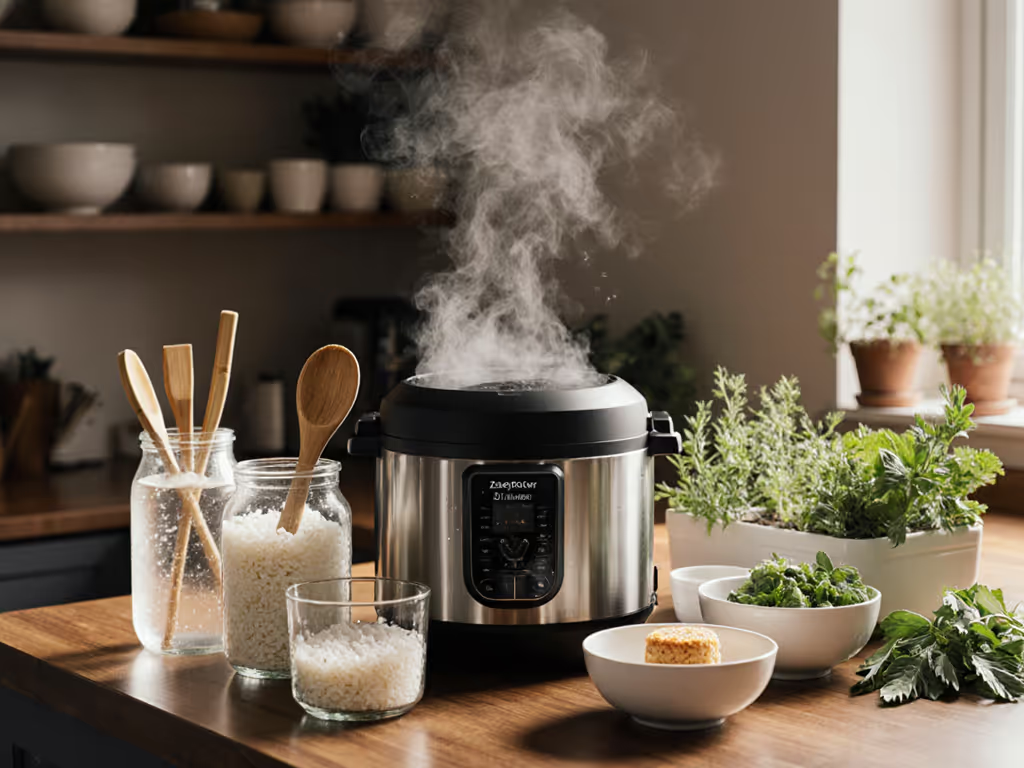
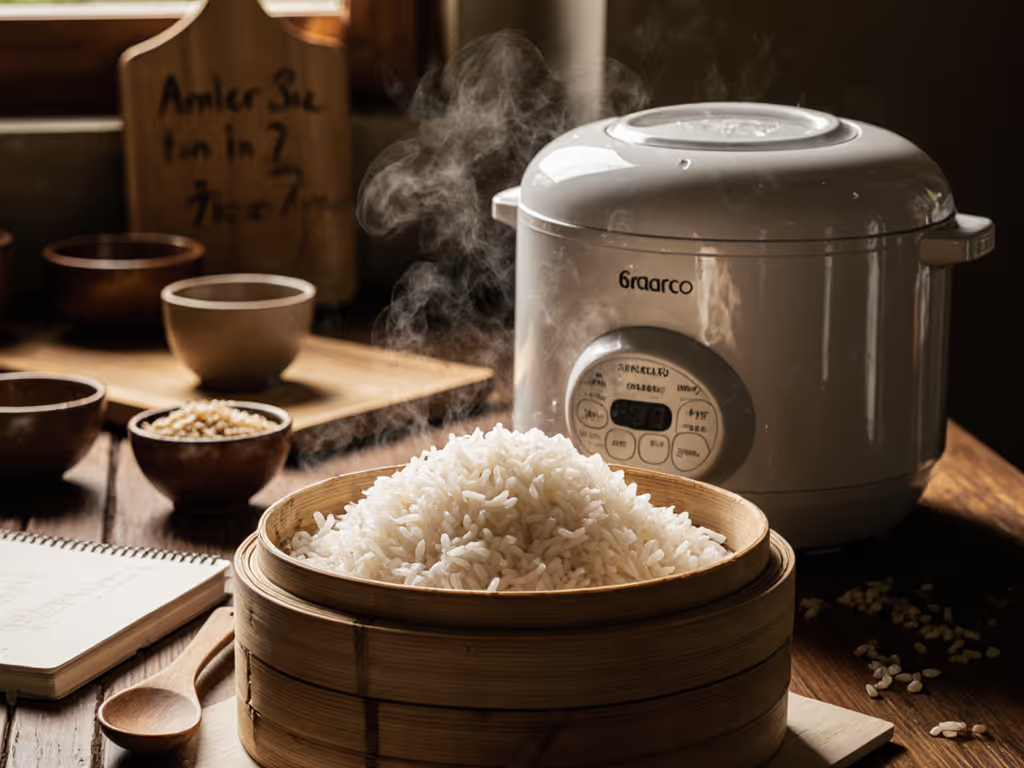
The conversation around sustainable rice cooking often focuses on appliance efficiency, but it rarely addresses the most overlooked resource: water. Between rinsing, steaming, and cooling cycles, a zero-waste rice cooker workflow recaptures dormant water and transforms yesterday's grain into tomorrow's texture. This guide unpacks the intersection of heritage technique, modern cooker design, and circular kitchen practice (because honoring the grain's story means respecting every drop and every leftover).
Why Zero-Waste Rice Cooking Matters
Rice feeds over half the world's population, and the scale of daily preparation means waste compounds quickly. A typical household cooking 2-3 cups of rice per day discards approximately 1-2 cups of starchy rinse water and, if rice is overcooked or uneaten, entire portions. When multiplied across families, neighborhoods, and regions, the cumulative loss is both a resource and a cultural disservice.
Zero-waste practice isn't ascetic minimalism, it's precision. When you capture rinse water and design cookers that honor resting windows, you're not sacrificing texture; you're amplifying it. The grain's mouthfeel, whether it yields to the tooth with a quiet sigh or fractures cleanly, is where hospitality lives. Missing it means the table feels it.
FAQ: Mastering Water Recycling and Leftover Reuse
1. How Does Recycling Rice Cooker Water Actually Reduce Waste?
Rinsing rice before cooking typically wastes 2-4 cups of potable water per batch, depending on grain type and rinsing rigor. That water (starchy, mineral-laden) traditionally goes down the drain.
Practical recapture:
- Collect rinse water in a separate bowl during the initial 2-3 rinses (before the water runs nearly clear).
- Use this water to water indoor or outdoor plants; the starch and trace minerals act as a mild fertilizer.
- For households with gardens or outdoor spaces, a collection jar placed under the cooker's vent during the steam phase captures condensation (pure, mineral-enriched water).
- The final "polishing" rinse water (nearly clear) can top off pasta water or be used in vegetable broths, bridging multiple cooking workflows.
This method recycles approximately 3-4 cups per week in a household cooking rice 3-4 times weekly. Scaled across a year, that's over 150 cups of water, or roughly 36 liters, returned to the home ecosystem rather than wastewater.
2. Can You Use Cooker Rinse Water for Cooking?
Yes, with a critical caveat: only in specific contexts and after appropriate treatment.
When reuse works:
- Congee and porridge: Starchy rinse water (collected from the 2nd and 3rd rinses) is ideal for congee bases. The residual starch creates the desired creamy body. For exact cooker-specific ratios, see our rice cooker congee guide. Add fresh water to the cooker, introduce the grain, and use half rinse water plus half fresh water for the initial cooking liquid. The texture, that soft, yielding bite central to congee, benefits from the trace minerals in the recycled water.
- Rice cooker steam phase: After rinsing, use collected water to refill the cooker's water chamber during the cooking cycle. This works best with short-grain and medium-grain varieties; long-grain basmati is more texture-sensitive and responds better to fresh water measured by weight.
- Broth and stock bases: Non-cooking use is safest. Rinse water strained through cheesecloth becomes a neutral, starch-thickened liquid for vegetable or light meat broths.
When reuse requires caution:
- If tap water in your region is hard (high calcium and magnesium), starchy rinse water can amplify mineral deposits in the cooker's heating element. Over time, this shortens appliance lifespan. If your tap is mineral-heavy, compare hard-water-tested rice cookers to reduce scaling and preserve texture.
- Using rinse water for direct cooking of delicate basmati or jasmine rice risks unpredictable water absorption and uneven doneness. These grains require precise water-to-grain ratios; introducing variable water chemistry breaks that precision.
- For brown rice and mixed-grain dishes, recycled water is viable only if your household has soft or neutralized water.
3. What's the Science Behind Repurposing Leftover Rice?
Leftover rice is not waste, it's a foundation grain awaiting transformation. The key is understanding its age, texture, and intended next use.
Texture change over time:
Freshly cooked rice, still in its resting window, holds maximum moisture and heat. By hour 4-6 after cooking (when rice reaches room temperature and begins to retract), the grain becomes firmer and less adhesive. By 24 hours, stored rice develops a subtle crust on surface grains where moisture has migrated inward; this textural split is ideal for fried rice, where you want individual grains that won't clump. For the health angle on aging rice, see our resistant starch rice guide.
Planned reuse pathways:
- Fried rice: Cook rice today at slightly higher water ratio (1:1.2 instead of 1:1) to ensure adequate moisture during storage. Dial in measurements with our rice cooker water ratio guide. By tomorrow, the residual water will migrate inward, creating the exact texture (discrete, slightly firm grains) that fried rice demands. This workflow eliminates the false urgency to "day-old" rice; you're engineering it from the first cook.
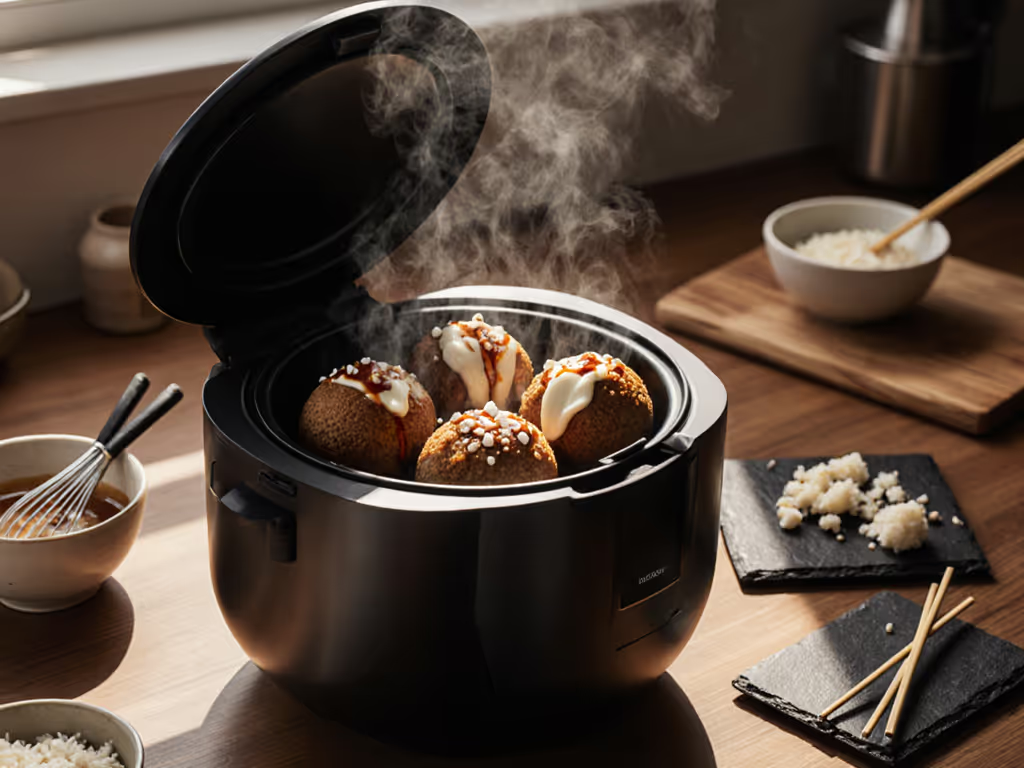
- Crispy rice cakes and snacks: Conceptual cookers now exist that automate the next step, converting day-old rice into crispy snacks without additional cooking. For home kitchens, spreading cooled rice on a sheet pan and oven-crisping at 300°F for 15-20 minutes yields a snack grain ready for salads, soups, or gentle crushing into coatings.
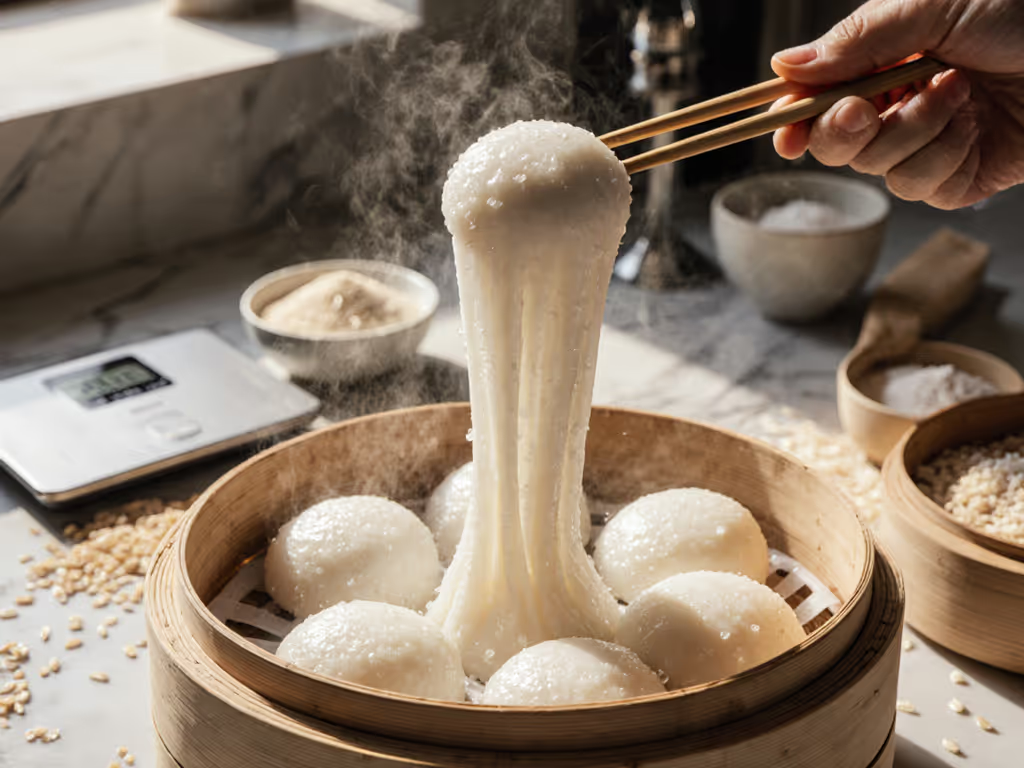
- Rice and broth dishes (congee, porridge, risotto-style): Leftover rice can be reintroduced into boiling broth (a practice common in Cantonese and Southeast Asian kitchens). The grain will soften slightly, but the mouthfeel transitions into a cohesive, creamy texture, a distinct culinary outcome, not a salvage operation.
- Pressed rice (tahdig, nurungji, crispy bottom crust): In Persian, Korean, and Middle Eastern kitchens, leftover rice is deliberately pressed into the cooker with fat and heat to achieve a golden crust. This reverses the grain toward crispness and is a celebrated texture, not a rescue.
4. How Do Resting Windows Preserve Both Texture and Minimize Waste?
This is where technique and waste reduction converge, and where the relationship between timing and bite feel becomes tangible.
After the cooker completes its cooking cycle, rice enters a critical resting window (typically 10-15 minutes with the lid sealed). During this phase, residual heat redistributes moisture from the outer layer inward, while steam pressure gradually normalizes. The grain transitions from soft-on-outside, firm-in-center to uniformly hydrated and structurally sound.
If rice is removed immediately after the cooker signals "done," grains are still absorbing steam and are maximally fragile, easily mashed or broken during serving. Waste occurs not as spoilage but as structural loss: a cup of perfectly cooked rice becomes 0.8 cups of intact grains.
Honoring the resting window, letting the cooker sit undisturbed, ensures that when you open the lid, every grain has settled into its intended texture and will transfer, serve, and store without fracturing. Over a year, this alone recovers 10-15% of what would otherwise be loss to breakage and mishandling.
For grains like basmati (which demands distinct, separate grains) or sushi rice (which must hold its shape under pressure), the resting window is non-negotiable. Skip it, and you're not salvaging rice later; you've already wasted it.
5. Are There Cookers Designed Specifically for Sustainable Cooking?
Current cooker design prioritizes speed and convenience over explicit waste reduction. However, certain models align with zero-waste workflows through durability, material choice, and precision features.
What to seek:
- Ceramic or stainless inner pots: These materials resist degradation and typically outlast nonstick coatings, meaning fewer replacements and less e-waste. For pros and cons by pot material, see stainless vs non-stick cookers. Stainless pots also tolerate repeated rinse-water reuse without chemical concerns.
- Removable lids and steam vents: Easier cleaning means less water waste on stubborn starch deposits. Cookers with accessible steam caps and gaskets reduce the likelihood of clogged vents that force replacement.
- Precise water-line markings: Cookers with clear gram-based or metric measurements (not just "cups") reduce overwatering, a primary cause of mushy rice and food waste. Some models now include markings for specific grains (jasmine, basmati, brown rice), lowering the trial-and-error that wastes batches.
- Multi-grain and porridge settings: Models that reliably cook congee, brown rice, and mixed grains expand the cooker's use case, reducing the likelihood of rice being discarded because it doesn't suit a single-purpose appliance.
- Extended keep-warm modes: Cookers that maintain rice warmth and moisture for 12-24 hours without drying or degradation reduce the disposal of yesterday's leftovers.
Material note: Avoid cookers with PFAS-coated nonstick surfaces if sustainability is central to your practice. PFAS chemicals persist in the environment and bio-accumulate; choosing ceramic or stainless aligns zero-waste values with health and ecological integrity.
6. How Does the Grain-Washing Step Fit Into a Zero-Waste Workflow?
Rice washing is both essential and wasteful, and the balance hinges on intention and grain type.
Why wash:
Rinsing removes loose starch, dust, and minor debris, revealing the grain's natural surface. This step is deeply embedded in heritage cooking practices across Asia, the Middle East, and Latin America. The ritual isn't ceremonial; it directly influences the cooked texture. Unwashed rice yields stickier, muddier-tasting results; washed rice achieves clarity and a finer mouthfeel.
Zero-waste washing protocol:
- Use a fine-mesh strainer or colander. Rinse under cold running water for 30-45 seconds (approximately 1 cup of water per cup of rice).
- Collect this first water separately; it's the highest in starch and debris. Use it as plant water or soup base.
- Repeat the rinse 1-2 times until water runs nearly translucent (not crystal-clear; you want to preserve some starch).
- Collect these secondary rinses for congee bases or broth.
- Do not over-rinse (5+ times). Beyond 2-3 rinses, you're removing beneficial trace minerals that influence flavor and texture; you're also generating excess water waste without proportional benefit.
This approach typically uses 3-4 cups of water per cup of rice, a figure that sounds high until you realize that without precise washing, the same rice may cook unevenly or yield poor texture, necessitating a re-cook (which wastes the original batch entirely).
7. Can You Engineer Rice Cooker Settings for Next-Day Fried Rice?
Absolutely. This is where waste reduction and culinary intention align perfectly.
Fried rice succeeds when grains are discrete, slightly firm, and non-adhesive, a texture opposite to that of freshly cooked, steaming rice. Most households either cook rice the day prior (creating deliberate leftovers) or spread fresh rice on a sheet pan to cool and dry, adding labor and energy.
Cooker engineering for fried rice readiness:
- Water-to-grain ratio adjustment: Use 1:1.2 (grain:water) instead of the standard 1:1. This yields slightly wetter rice that, after 24 hours of storage, will have completed its moisture migration and settle into the exact texture fried rice requires.
- Cook setting: Use the standard white-rice cycle, but skip the extended keep-warm function. After the resting window (10-15 minutes), spread rice on a sheet pan in a single layer and allow it to air-cool to room temperature (approximately 30 minutes). This expedites the moisture redistribution that happens naturally over 24 hours in a sealed container, and it reduces condensation that can reintroduce mushiness.
- Storage: Transfer cooled rice to an airtight container and refrigerate. By the following day, the grain structure will have solidified; when you stir-fry, each grain will fry individually without adhesion.
This workflow eliminates the false efficiency of using up old rice; instead, you're deliberately crafting tomorrow's fried rice texture from today's cook. Over time, this planning muscle transforms rice cooker use from reactive to intentional, and waste drops commensurately.
Weaving Practice Into Routine
Zero-waste rice cooking is not a burden imposed from outside; it's a recalibration of the daily practice you already follow. Start with water collection: place a jar or measuring cup under the cooker's vent during the steam phase, or designate a bowl for rinse water. Within two weeks, you'll see the accumulated volume, evidence that precision in the familiar act of cooking rice yields tangible resource recovery.
Next, intentionally cook rice with its next use in mind. If tomorrow is fried rice, adjust the water ratio and plan the cool-down. If congee is the goal, reserve rinse water. If leftovers are simply leftovers, design a resting window that locks in texture and minimizes breakage during serving. Over weeks, this grain language (the intimate knowledge of how water, time, and heat shape the bite) becomes second nature.
In my auntie's Shanghai kitchen, I learned that the difference between ordinary rice and rice that felt like an offering was measured in the precision of resting. A pinched grain, when cooled just so, would yield a quiet tear rather than a crumble. That same precision, that attention to invisible transitions, is what makes zero-waste practice not feel like sacrifice but like respect. Honor the grain's story by nailing its bite.
Further Exploration
As you refine your zero-waste rice cooker practice, investigate these deeper pathways:
- Cooker material science: Compare ceramic, stainless steel, and clay inner pots. Request specifications (coating details, thermal conductivity, PFAS status) directly from manufacturers; marketing claims often obscure material reality.
- Regional water profiles: If your household has hard water, test how recycled rinse water affects your specific cooker model over 6 months. Document any heating-element buildup or texture shifts.
- Grain-specific resting windows: Time how different varieties (jasmine, basmati, sushi rice, brown rice, millet) respond to varying resting durations. Photograph the texture at 5-minute intervals post-cook. Build your own reference library tied to your cooker and local water.
- Community grain exchanges: Share cooled, properly stored rice with neighbors or food-insecure communities rather than disposing of surplus. This extends waste reduction into food access and builds reciprocal kitchen culture.
- Appliance durability tracking: If you've held a cooker for 3+ years, document which materials and settings have aged best. Your long-term experience will inform whether the next cooker you choose is truly built for longevity or designed for planned obsolescence.
Zero-waste rice cooking is a conversation between your kitchen, your grain, and the resources you steward. Each cycle offers a chance to listen, adjust, and prove that hospitality, felt in every mouthfeel, begins before the table is set.
Related Articles