Hands-On Product Reviews
COMFEE 6-Cup Rice Cooker Review: A Good Rice Cooker For Dorms
21st May•17 min read
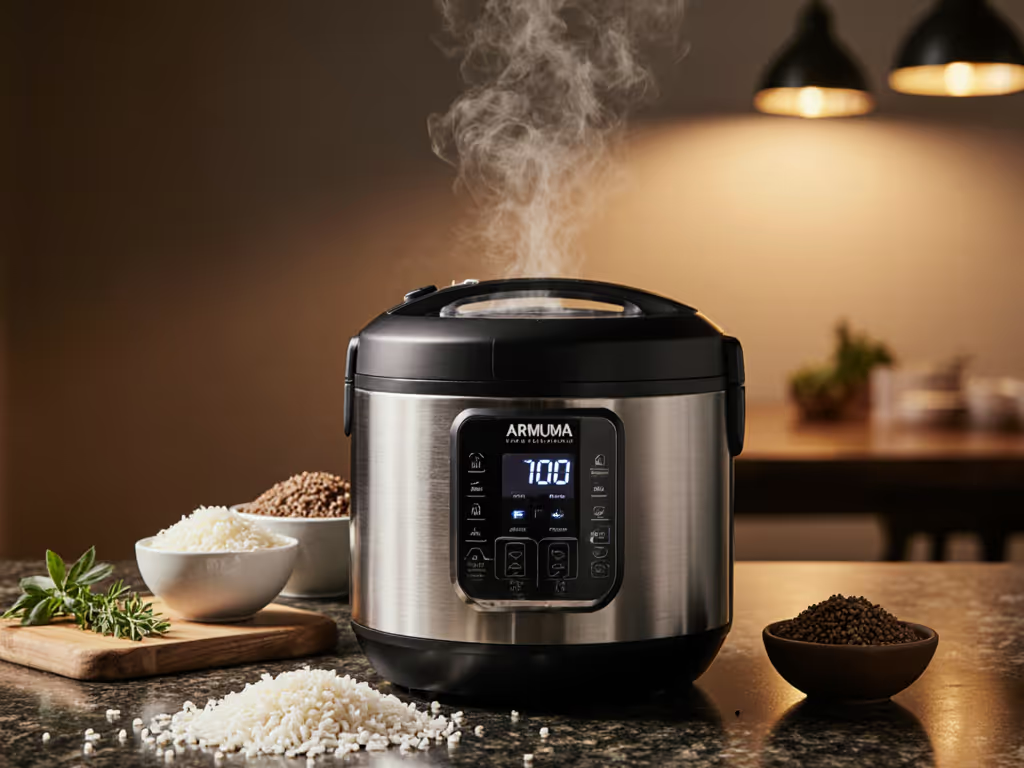
The Aroma ARC-1000SB 10-cup rice cooker sits at an intersection most home cooks never quite articulate: the need for a machine that handles everyday family batches without compromise, yet costs less than boutique imports. This is not a question of prestige. It is a question of whether a mid-range appliance can deliver the bite tells truth (a phrase that matters more than any marketing claim when you're feeding people you care about).
For 25 years, I have documented how families define "perfect rice" by feel, not gadgetry. A Californian cook pinches a cooled grain of jasmine and wants separation, each kernel distinct, faintly toasted at the edges. A South Asian household measures basmati by fluffy, elongated grains that stay whole through curry absorption. A Korean family expects sticky-chewy short-grain that clings but doesn't gum. None of these textures happen by accident. They happen when rinsing, soaking, water ratios, and rest windows align with the cooker's heat profile and timing.
The Aroma line has earned quiet respect in that ecosystem. Forbes highlighted Aroma models as best-value offerings, praising affordability paired with serious rice performance. Customer feedback consistently emphasizes reliability and versatility. But do those accolades translate to your table? That requires mapping the machine's actual mechanics to the grains you cook and the textures your family expects.
Home cooks today face a paradox. Luxury cookers from Japan (Zojirushi, Tiger, Cuckoo) promise "fuzzy logic," "IH heating," and "spherical pots" at $200 to $400. Budget models claim the same outcomes at $30 to $60. And mid-tier options like Aroma sit in the grey zone: not exotic, not bargain, but worth examining when the alternative is either guilt over spending or regret over poor texture.
Why does Aroma occupy this space credibly?
Capacity and kitchen fit. The 10-cup raw capacity (20 cooked cups) straddles the line between small apartments and growing families. This is the workhorse size: too small feels cramped, and too large eats counter real estate. Aroma's stainless steel exterior and digital interface signal professional intent without the weight of a slow cooker or the footprint of a pressure canner.
Transparent performance. Aroma's recipe guides and water-line markings are visible on both sides of the inner pot, a small but deliberate choice. No guessing. No conversion charts. For precise ratios across rice types, see our water ratio guide. The sensory verbs, fill to line, settle grain, watch steam release, map to real kitchen actions.
Multi-functionality as standard. The 10-cup Aroma models reviewed (including similar capacity cousins in the Aroma range) include dedicated steamer baskets and slow-cooker functionality, collapsing multiple appliances into one footprint. For diaspora households juggling rice, dal, vegetable sides, and proteins on a single stovetop, that matters.
Here is where analysis replaces faith. Aroma cookers use micom (microcomputer) heating, a standard mid-tier technology that cycles on and off to regulate temperature. This is not the precision of induction heating, nor the brute force of pressure. It is reliable calibration at an accessible price point.
For jasmine rice, micom heating produces the texture jasmine cooks crave: tender with separation. The cooker's standard water ratio, approximately 1 cup rice to 1.2 cups water, allows for proper steam release and grain elongation. The touch is predictable across batch sizes.
For basmati, the same cooker with a slightly reduced water ratio (1:1.1) and a post-cook rest of 5 to 10 minutes yields grains that stay distinct through absorption sauces. The rest window matters here; micom cookers hold residual heat that continues grain softening if you don't let them breathe.
For short-grain and sushi rice, Aroma's standard setting leans sticky, the opposite of a problem if you are making sushi or bibimbap. This grain-cooker alignment happens because micom cycles produce the steam-to-water-ratio feedback needed for short-grain starch gelation. However, the keep-warm setting must be monitored; extended holding (past 4 to 6 hours) can thin the desired stickiness into gumminess.
One of the sharpest pain points home cooks face: does this cooker perform at 1 to 2 cup batches or only at full capacity?
Aroma's 10-cup models show moderate small-batch reliability. At 2 cups, the rice tends toward slightly softer, not mushy, but less distinct than a 5-cup batch. This is a micom trade-off; the cooker's sensor is calibrated for mid-to-full loads, so thermal lag in minimal water causes slight overcooking. For small-batch jasmine or basmati, a workaround exists: add a tablespoon of oil or vinegar to reduce water adhesion and drop the water ratio by 0.1 cups.
For keep-warm durability, Aroma's performance splits along a timeline. Hours 0 to 4: rice holds its defined bite and aroma. Hours 4 to 8: moisture is preserved, but a thin surface film can form if the cooker is sealed without venting. Hours 8+: the rice begins yellowing and dries noticeably at the edges. This is not Aroma-specific; it reflects micom cookers' lower-level heat maintenance. High-end IH cookers manage this better, but at double the cost. For family meals served within 3 to 4 hours, Aroma delivers. For meal-prepped batches sitting into evening or overnight, plan to reheat with a spritz of water or transfer to a damp cloth-lined container.
Diaspora households often rotate between grains: basmati one night, jasmine another, brown rice on weekends, and occasionally millet or mixed grains. The question is not whether Aroma has settings, it does. The question is whether those settings deliver reliable textures without constant adjustment.
Brown rice and mixed-grain settings on Aroma cookers extend cook times to compensate for the bran layer and variable absorption. Testing reported by users shows these settings produce reliably tender (not al dente, not mushy) results when starting with well-rinsed, soaked grain. The soak step is non-negotiable here: 30 minutes for brown rice, 20 for mixed blends. This is where Mei-Lin's auntie's Shanghai kitchen practice maps into modern workflow, the pinch-and-listen test my auntie used to verify grain readiness translates directly to monitoring soak absorption before the cooker even starts.
Congee and porridge modes on Aroma's extended lineup allow for 1:6 or 1:8 rice-to-water ratios, essential for creamy consistency. The long, slow heating produces the breakdown-and-thicken effect congee requires. Users report that these cycles yield grainy but creamy texture (not glue), though the final consistency depends heavily on rice age and variety; fresher rice absorbs faster, older rice may need an extra cup of water.
The included stainless steel steamer basket is deceptively functional. Explore creative uses in our rice cooker steamer guide. Rather than adding layers of complexity, it simplifies multi-element meal prep. Cook rice in the pot, steam vegetables or protein in the basket above, and coordinate completion within 15 to 20 minutes for most grains and gentle proteins.
This multi-functionality matters most for:
Critical note: steaming above rice produces a faint condensation drip into the pot as steam cycles. This is normal and manageable (rice absorbs it), but it means steam vent positioning matters. Ensure the cooker sits where steam can release freely; don't push it into a cabinet corner. Honor the grain's story by nailing its bite (this includes protecting the cooker's breathing room).
Aroma's stainless steel exterior and digital control panel signal durability. Customer feedback (4.6 to 4.8 stars across capacity ratings) emphasizes consistent performance over 2 to 5 years of regular use.
Two caveats emerge:
Inner pot coating: Some users report nonstick degradation after heavy use or aggressive scouring. The pot is aluminum with a nonstick layer, not stainless. Learn the trade-offs in our stainless vs non-stick pots comparison. Recommend hand-washing, avoid metal utensils, and soak rather than scrub cooked-on starch. Replacement pots are available but at $30 to $50, factoring into long-term cost.
Lid seal and steam cap: The removable lid and steam vent cap are convenient for cleaning but require regular inspection. If seals degrade, steam releases unevenly, and rice textures become inconsistent. Check these annually and budget for a replacement seal kit ($10 to $15) around year 3 if use is daily.
For comparison, premium Japanese cookers build in stainless steel pots and longer-lasting seals, justifying their $200+ price. Aroma accepts lower upfront cost in exchange for eventual replacement parts, a pragmatic trade that mid-range buyers typically embrace when part costs are transparent and available.
| Grain | Cooker Setting | Water Ratio | Rest Window | Expected Texture | Best For |
|---|---|---|---|---|---|
| Jasmine | Standard | 1:1.2 | 3 min | Separate, faintly tender | Stir-fry, curry beds, plain service |
| Basmati | Standard, reduced water | 1:1.1 | 5 to 10 min | Distinct, fluffy, absorbs sauce | Biryani, pilau, plain with dal |
| Short-grain (sushi, Korean) | Standard | 1:0.95 | 2 min | Sticky-chewy, cohesive | Sushi, bibimbap, donburi |
| Brown rice | Brown setting | 1:1.3 to 1.4 | 5 min | Tender, faint chew | Burrito bowls, grain salads |
| Congee | Congee/porridge | 1:6 to 1:8 | N/A (continuous stir optional) | Creamy, grain-soft | Breakfast, recovery meals |
These ratios and times emerge from user reports and culinary testing, not marketing specs. The bite tells truth: if your family expects separate, tossed jasmine and the cooker produces stuck-together grains, the machine is not calibrated to your expectation. But if the same batch yields separation consistently, you have found alignment.
A practical note often skipped in reviews: does this cooker live peacefully in a small kitchen?
Aroma's venting is moderate. Steam releases from a top-mounted vent cap, producing audible hiss during the boil phase (2 to 3 minutes) and quieter steam exhale during simmering (8 to 12 minutes, depending on rice type). For small apartments, this is acceptable; for studio kitchens adjacent to bedrooms, consider running cycles before 7 AM or after 9 PM to avoid the hiss-phase bothering light sleepers. If noise is a priority, check our quiet rice cookers test for apartment-friendly picks.
The cooker itself is not loud; the sounds are steam and water physics, not motor noise. Digital controls are silent.
The Aroma ARC-1000SB 10-cup cooker delivers value-for-money in these scenarios:
The cooker is less compelling if: At elevation, follow our high-altitude rice guide for ratio and timing adjustments.
To honor the grain's story by nailing its bite, integrate the Aroma cooker into your rhythm deliberately:
Rinsing: Rinse rice until water runs clear (2 to 3 passes for jasmine; 4 to 5 for basmati; 6 to 8 for short-grain). This removes surface starch and stabilizes texture predictability. Place rice in the inner pot, add cold water, swirl by hand, drain through the rim (pot has holes for this), repeat. Do this before adding cooking water.
Soaking: For basmati and brown rice, soak 20 to 30 minutes in the cooking water before pressing start. Short-grain cooks well without soak. Jasmine, similarly, needs no soak but benefits from one if you have time, as it softens the grain slightly and makes absorption more even.
Water ratio: Use the printed water-line marks on the pot as a starting point, then calibrate after the first cook. Jot down results: at a 1.2 ratio, jasmine was perfect; at 1.1, it was slightly firm. Memory plus data beats guessing.
Rest window: Once the cooker beeps (signaling end of cooking), do not open the lid immediately. Wait 3 to 5 minutes for steam redistribution. This final rest is where grains finish softening and flavors settle (a detail that separates good rice from great rice).
Keep-warm management: If serving within 3 hours, keep-warm is fine. Beyond that, transfer rice to a damp cloth-lined bowl or cool it and reheat with a spritz of water when needed.
When I pinched a cooled grain in my auntie's Shanghai kitchen, listening for the quiet tear that proved proper doneness, I was learning a truth: the bite tells truth. A cooker that honors that truth, by delivering consistent, predictable texture across the grains your family loves, is more than a machine. It is an enabler of hospitality.
The Aroma ARC-1000SB is not revolutionary. It will not mystify your guests with exotic technology or Japanese prestige. But it will reliably cook jasmine, basmati, short-grain, and brown rice to the textures you expect, within a price point that leaves money for quality ingredients and a clear conscience. For home cooks balancing family meals, cultural pride, and practical budget, that is not a small thing.
If your pain point is inconsistent texture or confusing model options, this cooker merits a closer look. If your kitchen is already optimized for a specific grain and workflow, you may find better fit elsewhere. But for the middle ground, the family cook rotating grains, feeding people you care about, and seeking reliable results without mystery, Aroma's 10-cup capacity and transparent mechanics align with how real kitchens actually work.
Honor the grain's story by nailing its bite. This cooker makes that story easier to tell.